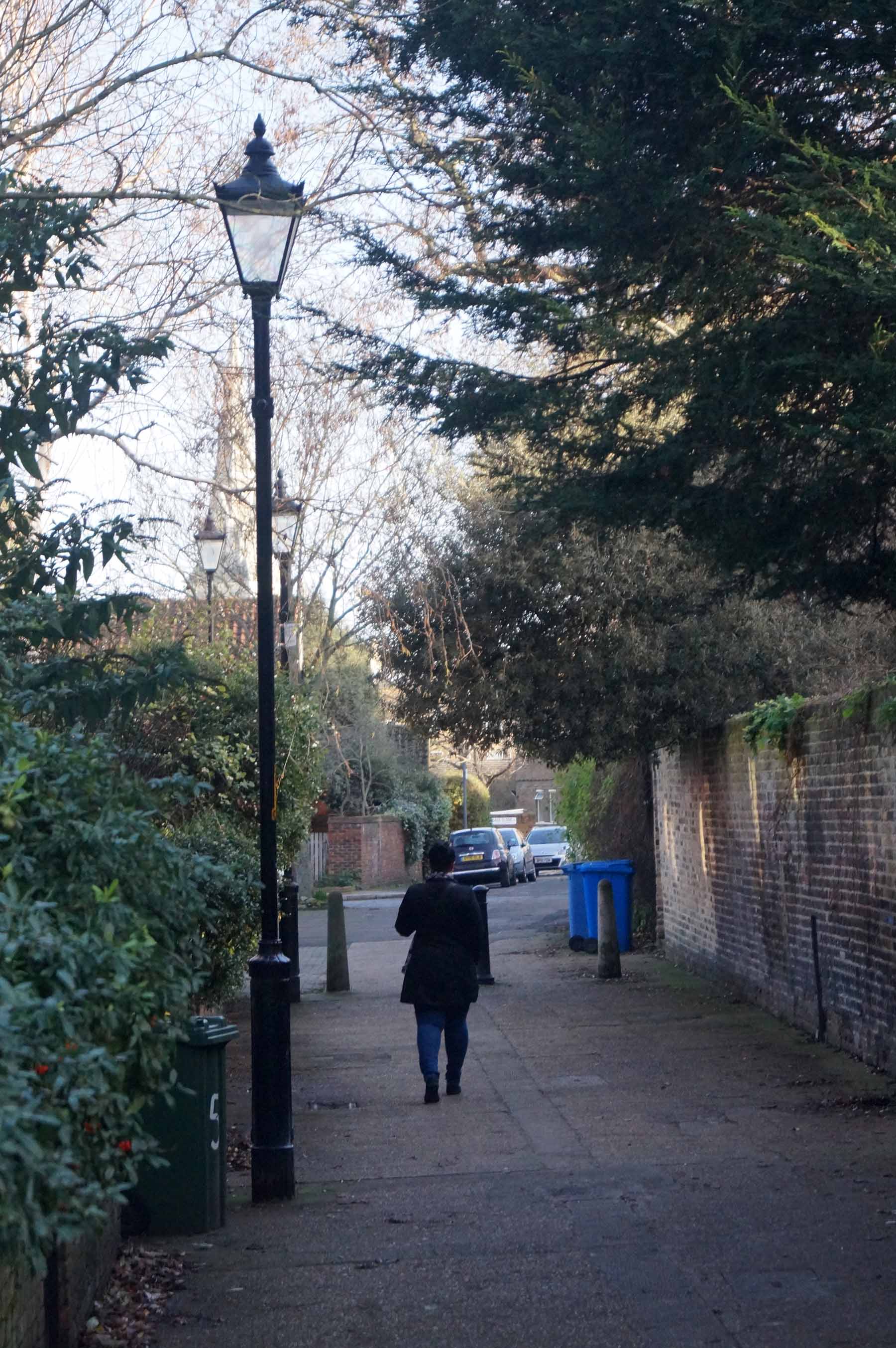
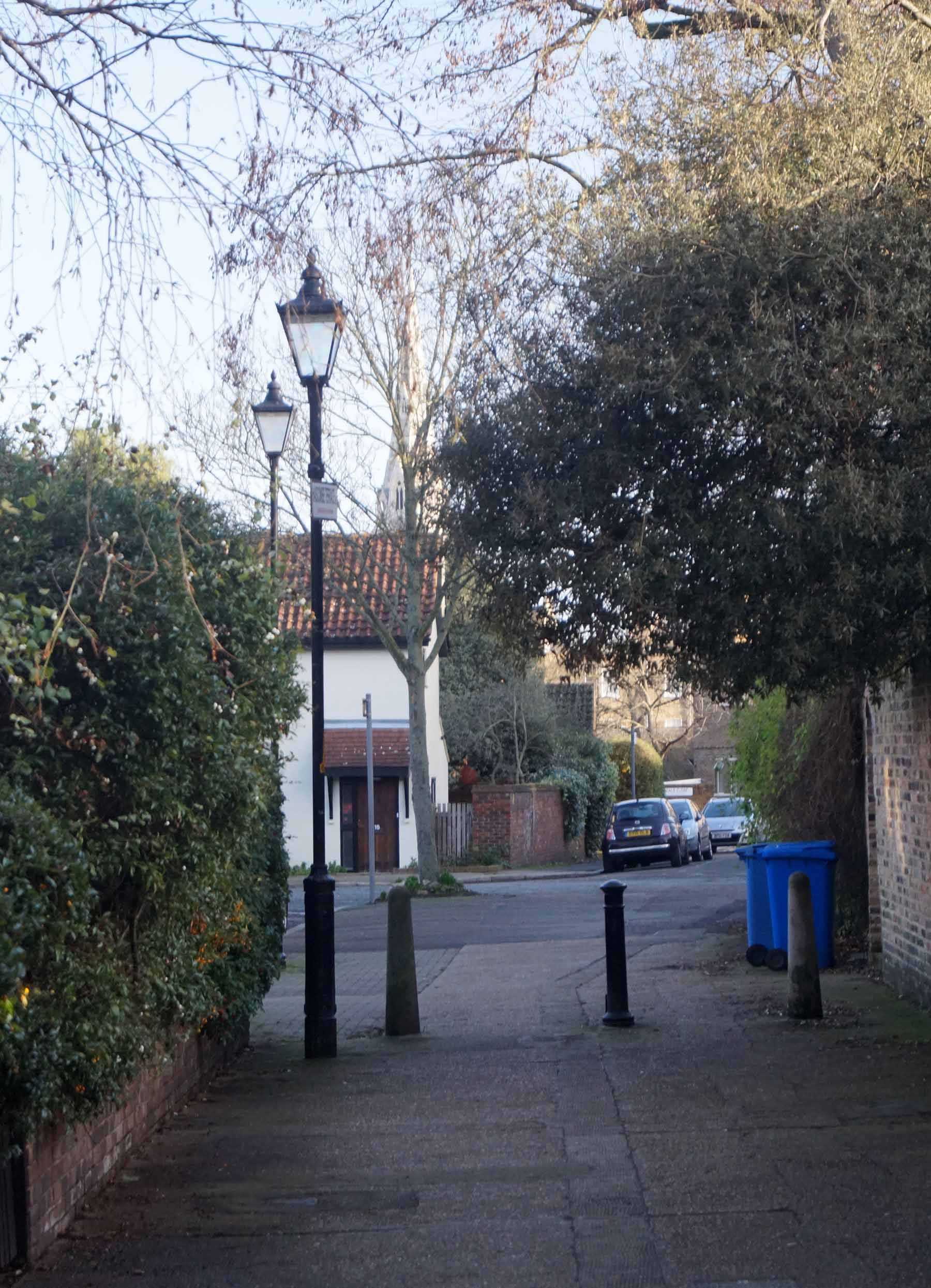
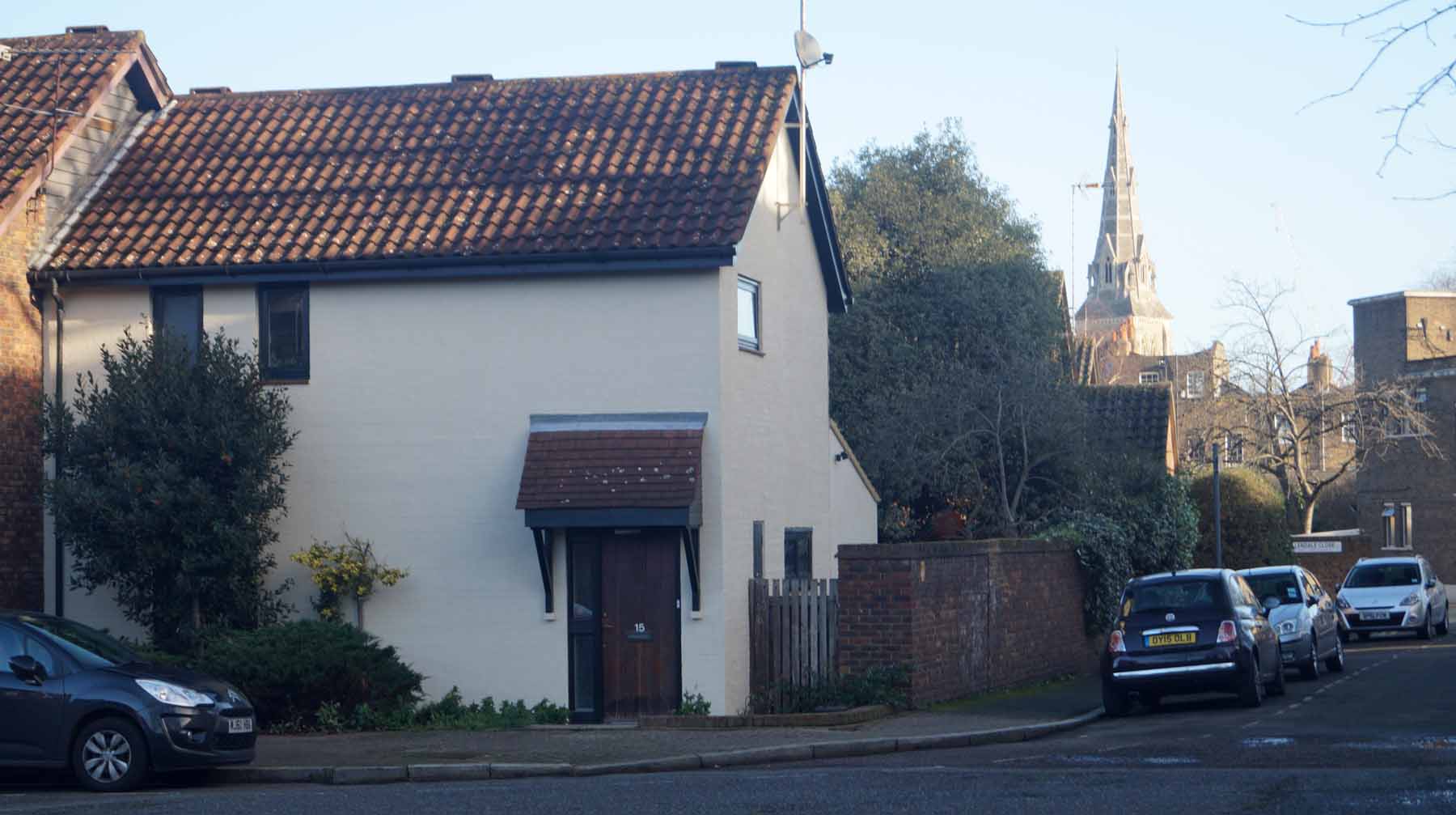
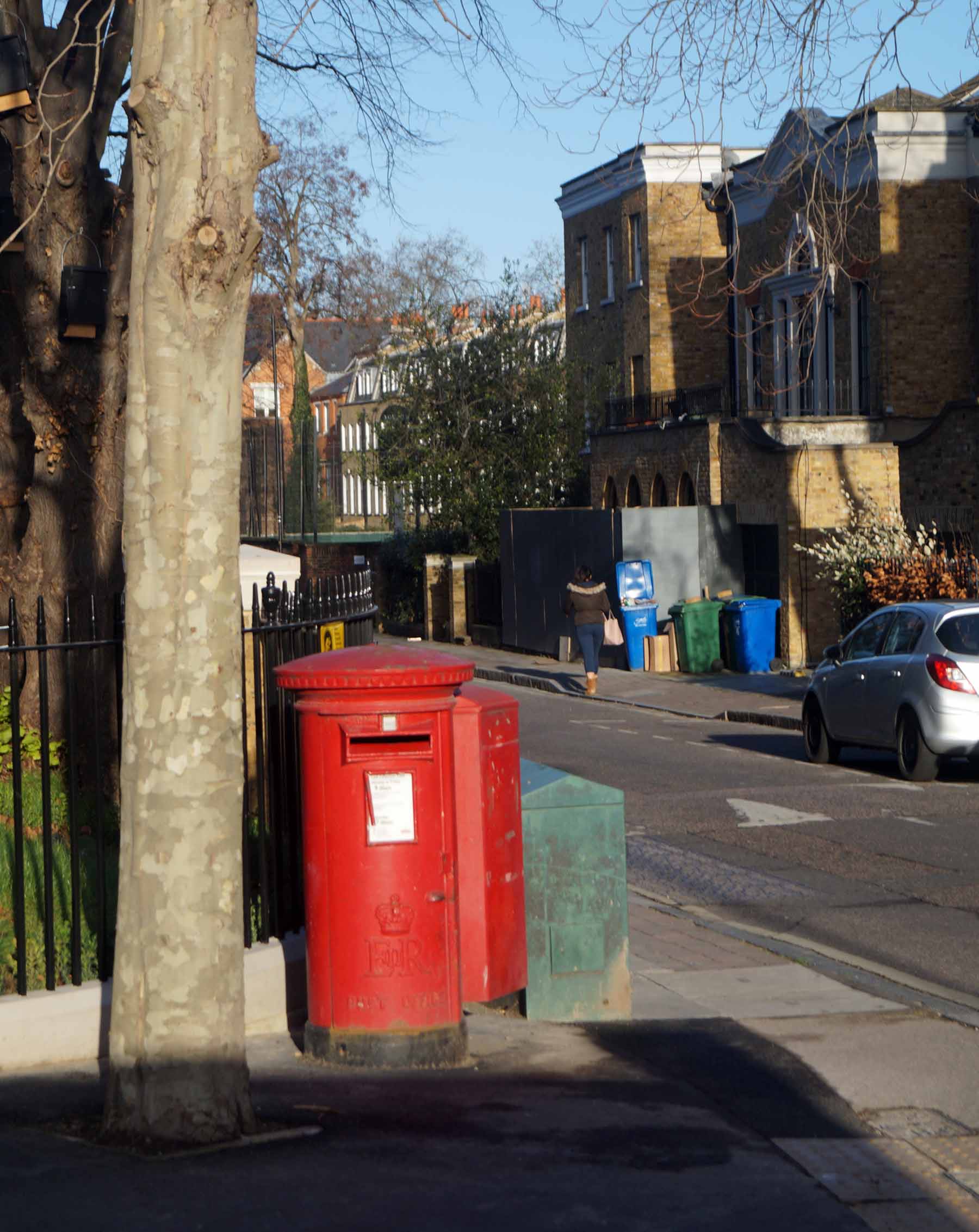
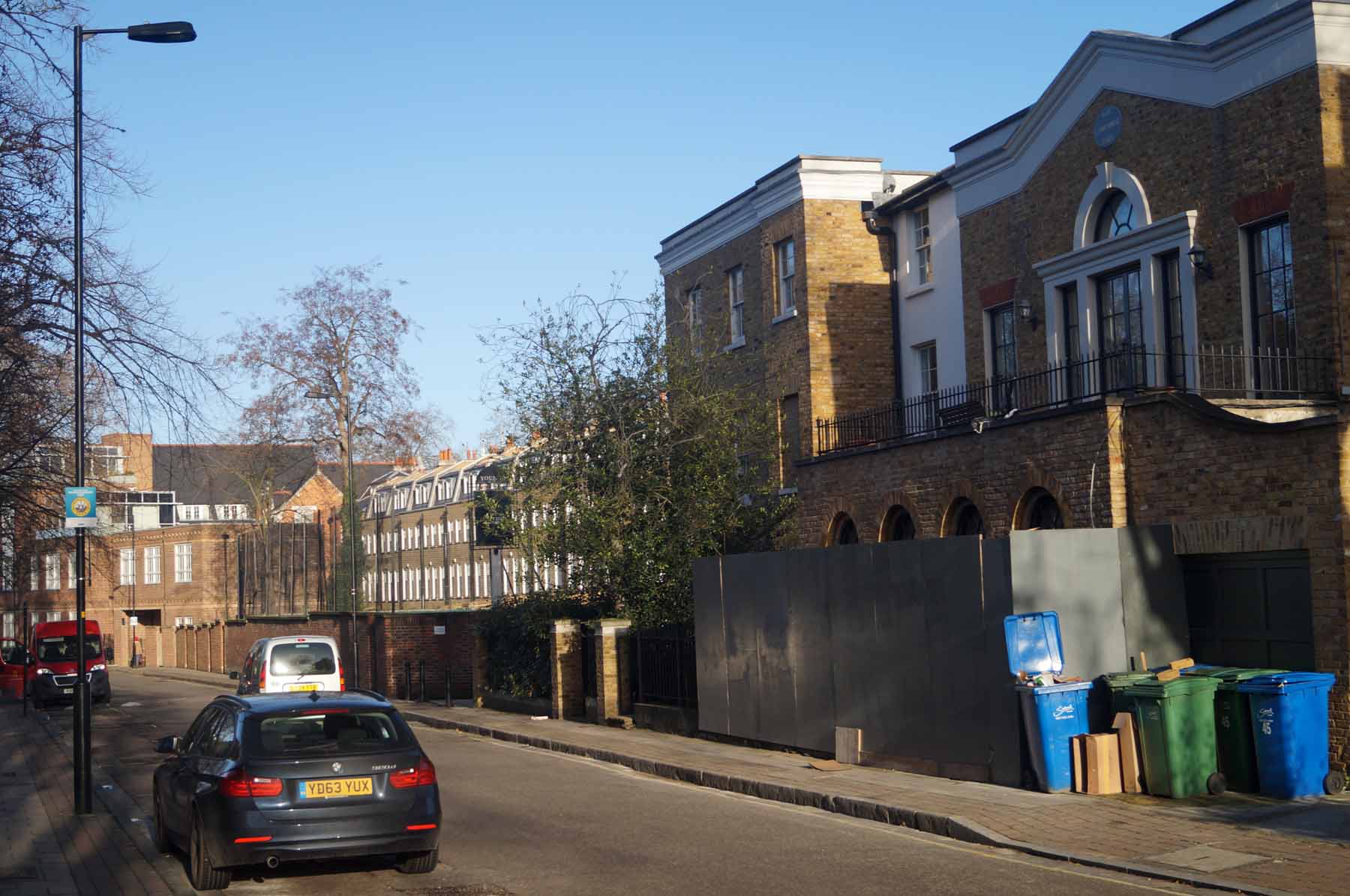
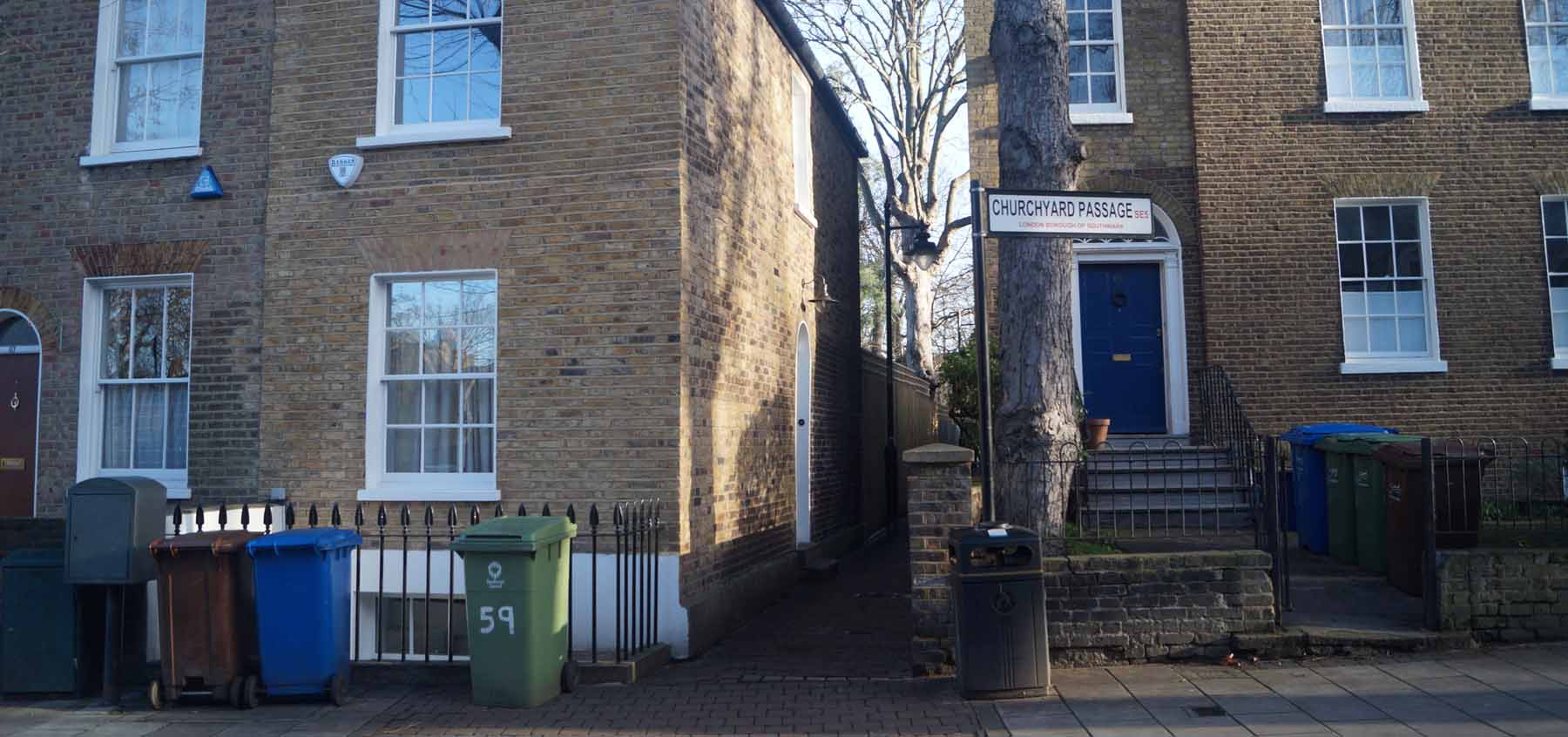
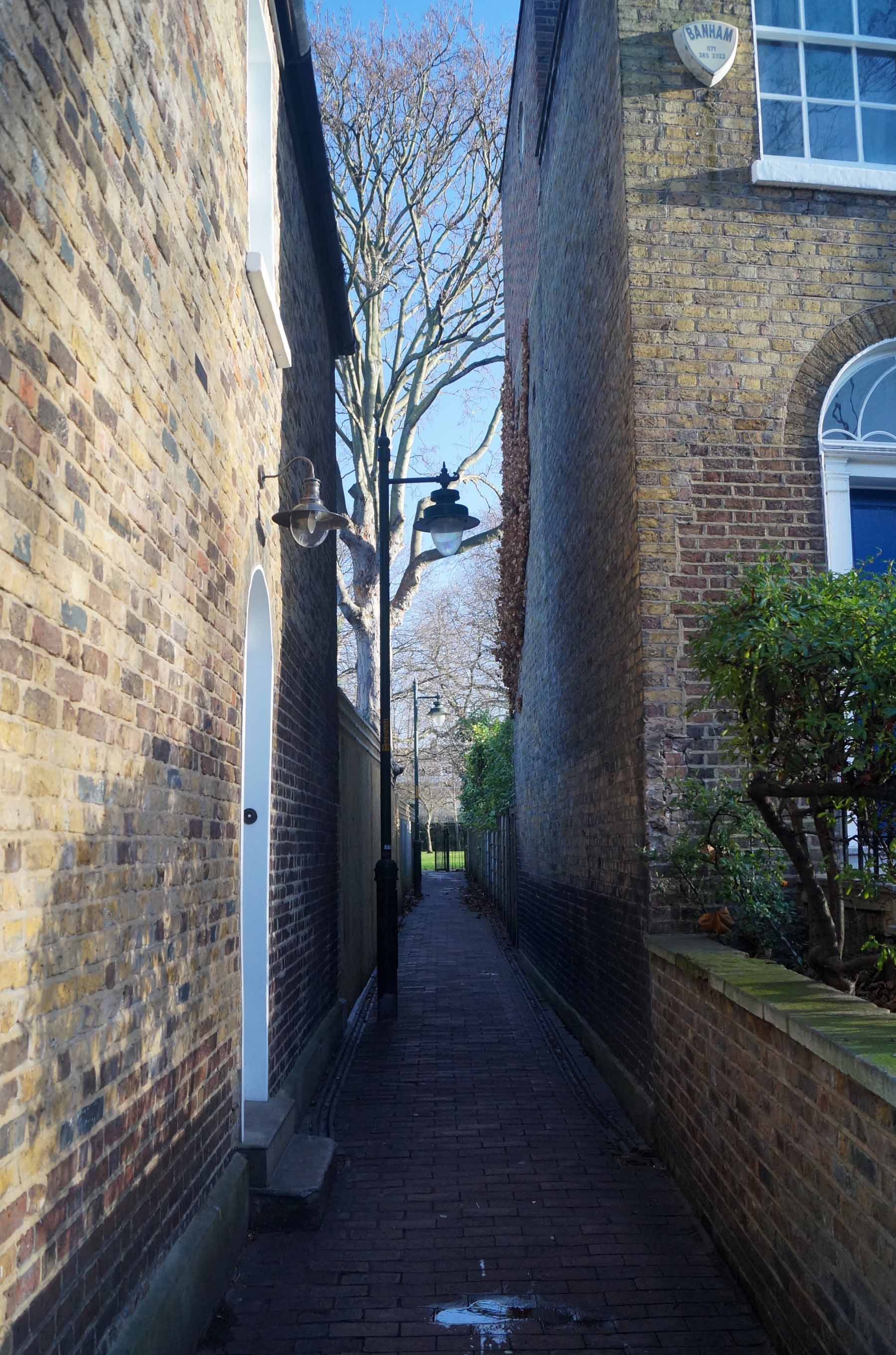
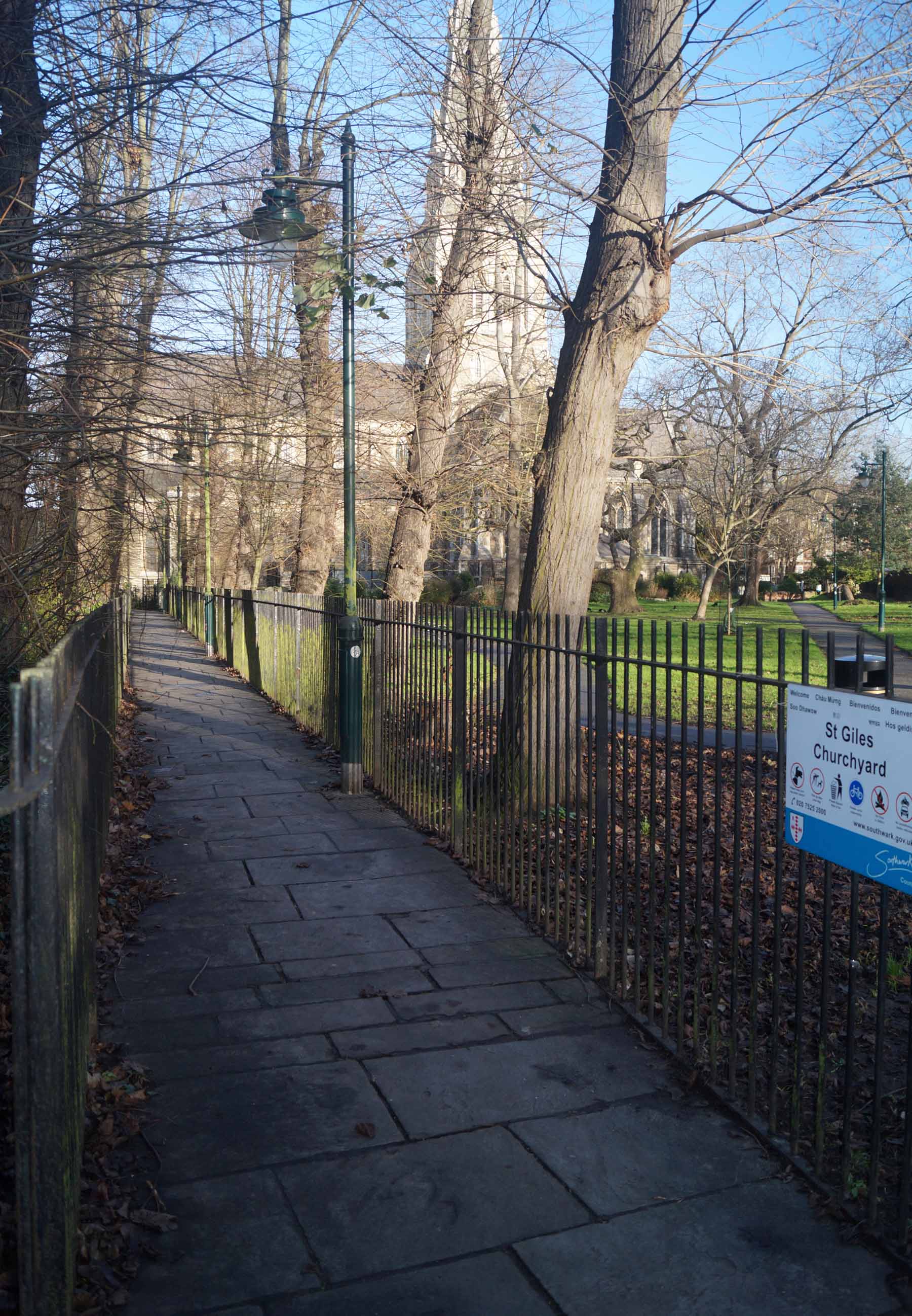
An Ancient Right of Way – a walk from Coldharbour Lane to Camberwell Church Street

Mary Boast in her book The Story of Camberwell, published in 2000 by London Borough of Southwark in it’s Neigbourhood History series, No 1 talks about an ancient right-of-way, a path from St Giles Church to Coldharbour Lane.

Added: Dec 2017. RJ Warhurst in his book A View of Dulwich, Peckham and Camberwell around 1300, talks about records from the time mentioning two highways.  One in 1329 was called a King’s Highway or Eststrete running in a north-west direction. He suggests parts of the route Grove Lane/Dog Kennel Hill/Lordship Lane were on this route. The second route was called Weststrete he suggest could have been Camberwell Church Street leading to Coldharbour Lane.

I thought it might be interesting to walk the path photographically. Thanks to my friend Nick Stevens who joined me and took all the fabulous photos.

We start on Coldharbour Lane.

DSC03184

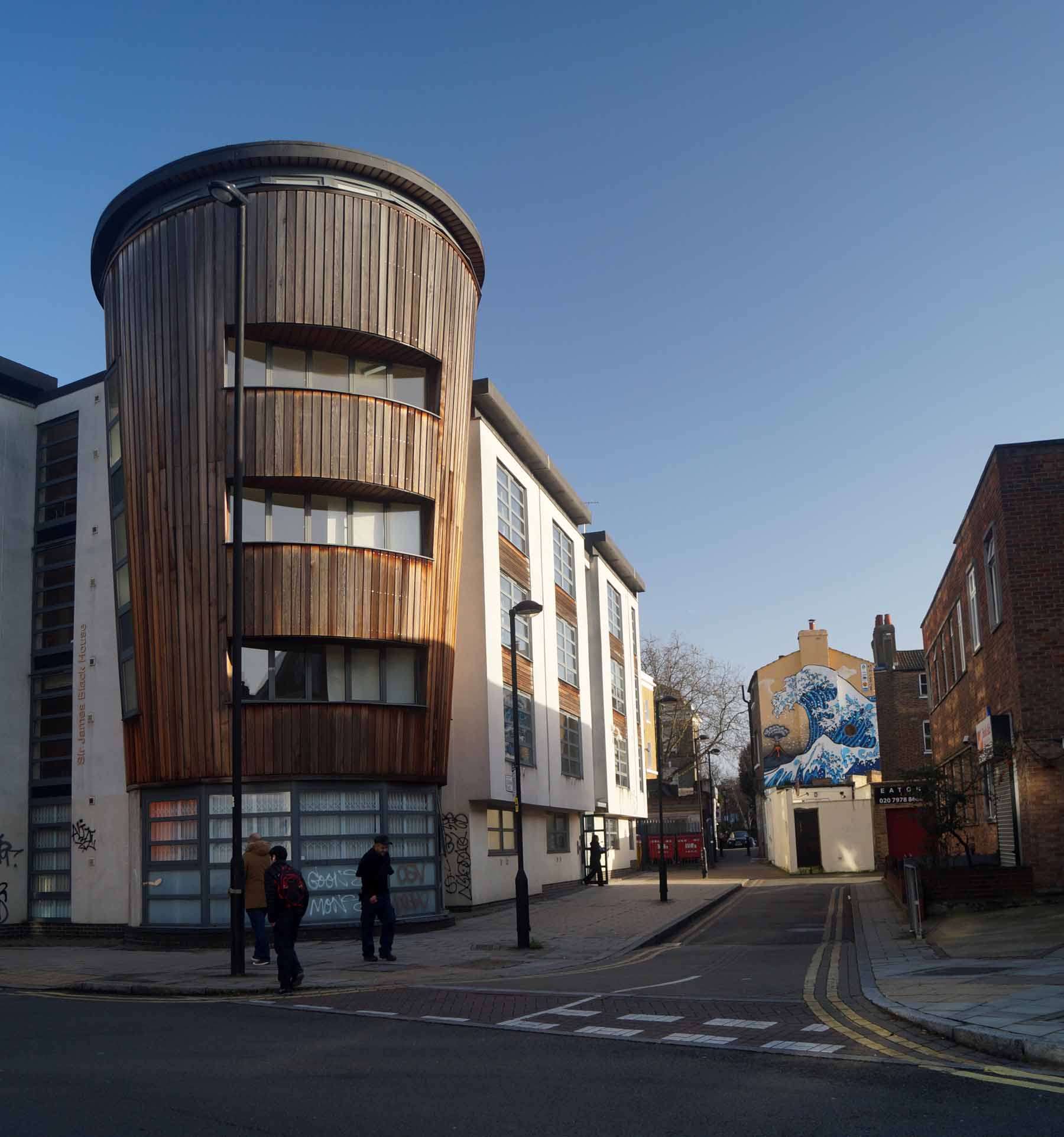
The entrance to Coldharbour Place.

DSC03181

A version of the Katsushika Hokusai’s 1831 wood block print. It first appeared in 1998 for the Camberwell Arts Festival, was almost lost permantly due to a fire in the Garages below in 2012. But luckily for us all it was repainted, in 2013 I think.

DSC03178

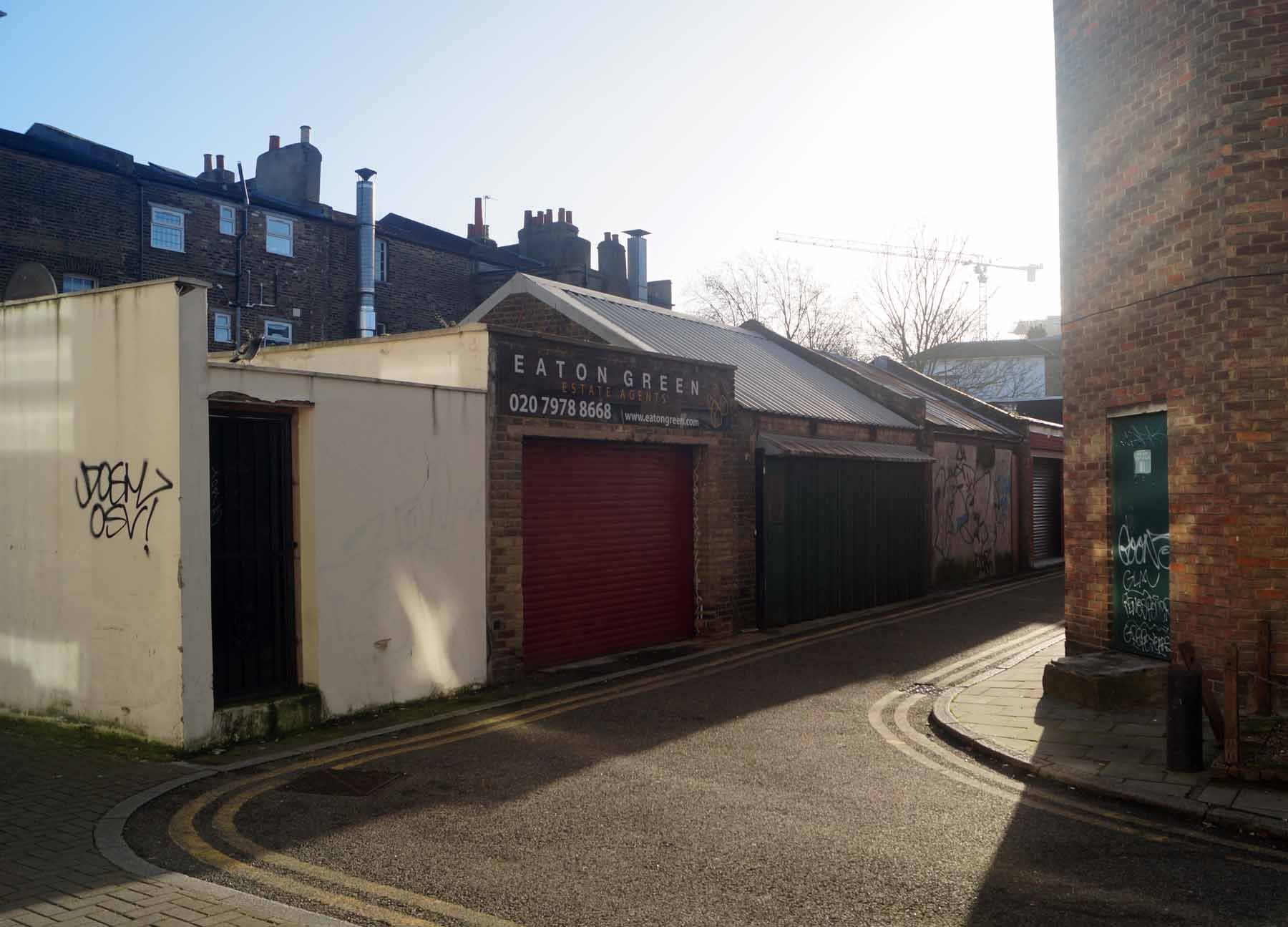
Garages running to the north off Coldharbour Passage.

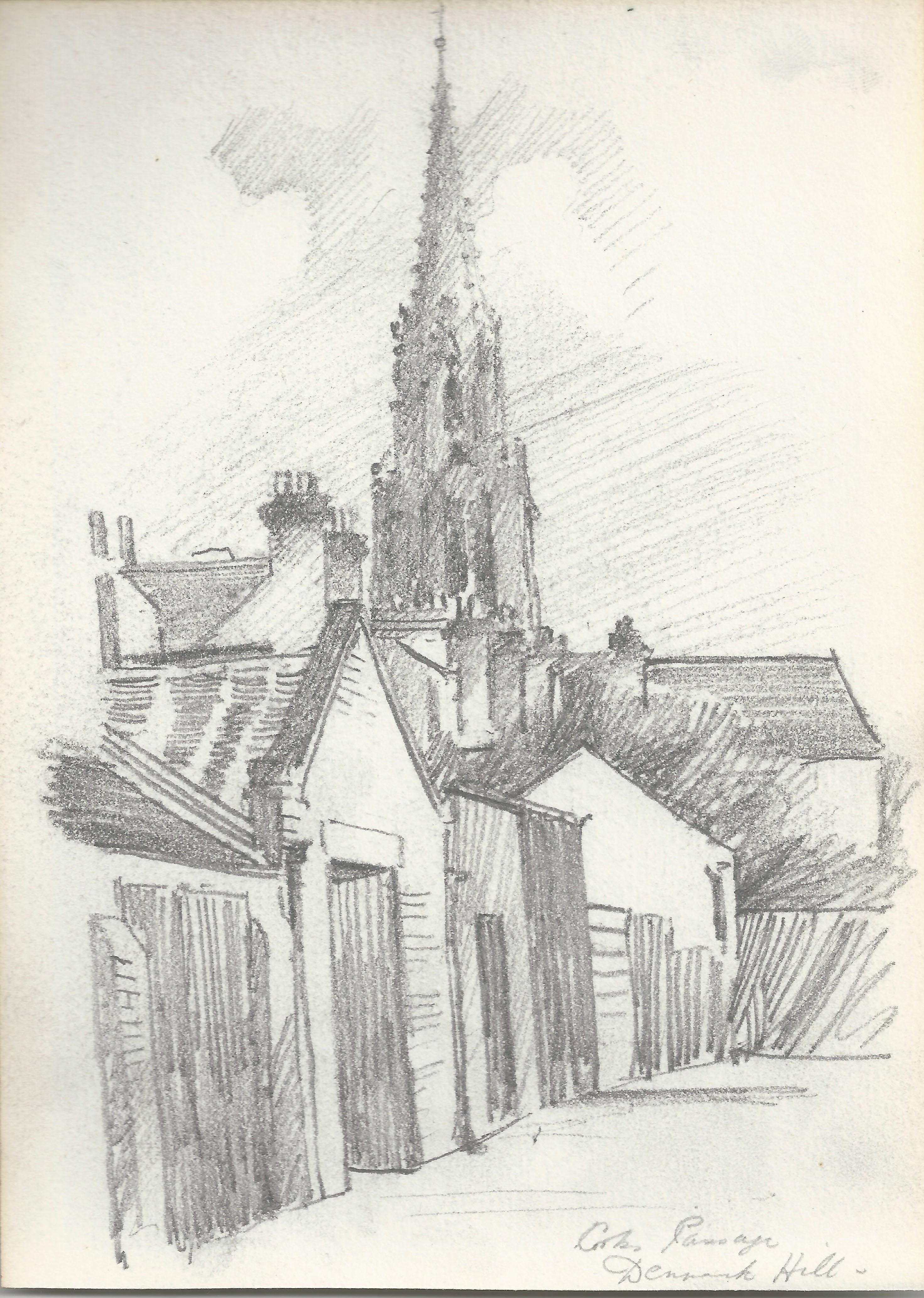
Coldharbour Passage, Denmark Hill, view of St Matthews , Ernest Suttin, pencil drawing, 1907

A pencil drawing by Ernest Sutton from 1907 showing the Garages with St Matthews Church on Denmark Hill in the background.

DSC03176

Across Denmark Hill into Love Walk.

DSC03172

DSC03170

DSC03166

DSC03164

DSC03163

DSC03159

DSC03158

DSC03157

DSC03154

DSC03153

DSC03148

DSC03146

DSC03145

Looking down Grove Lane towards Camberwell.

DSC03141

At the end of this stretch is the Grand Union pub formerly the Grove Tavern.

DSC03136

DSC03134

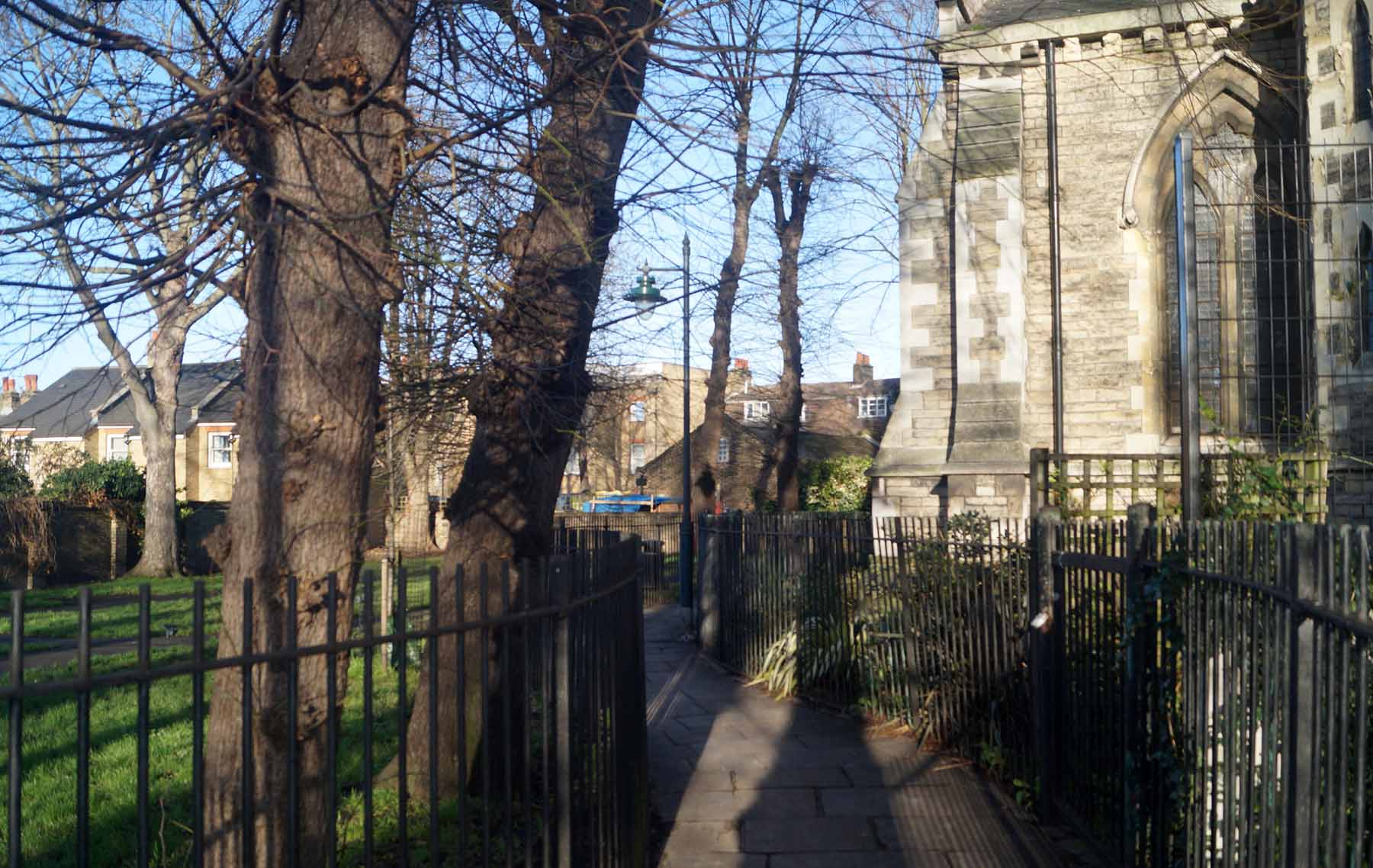
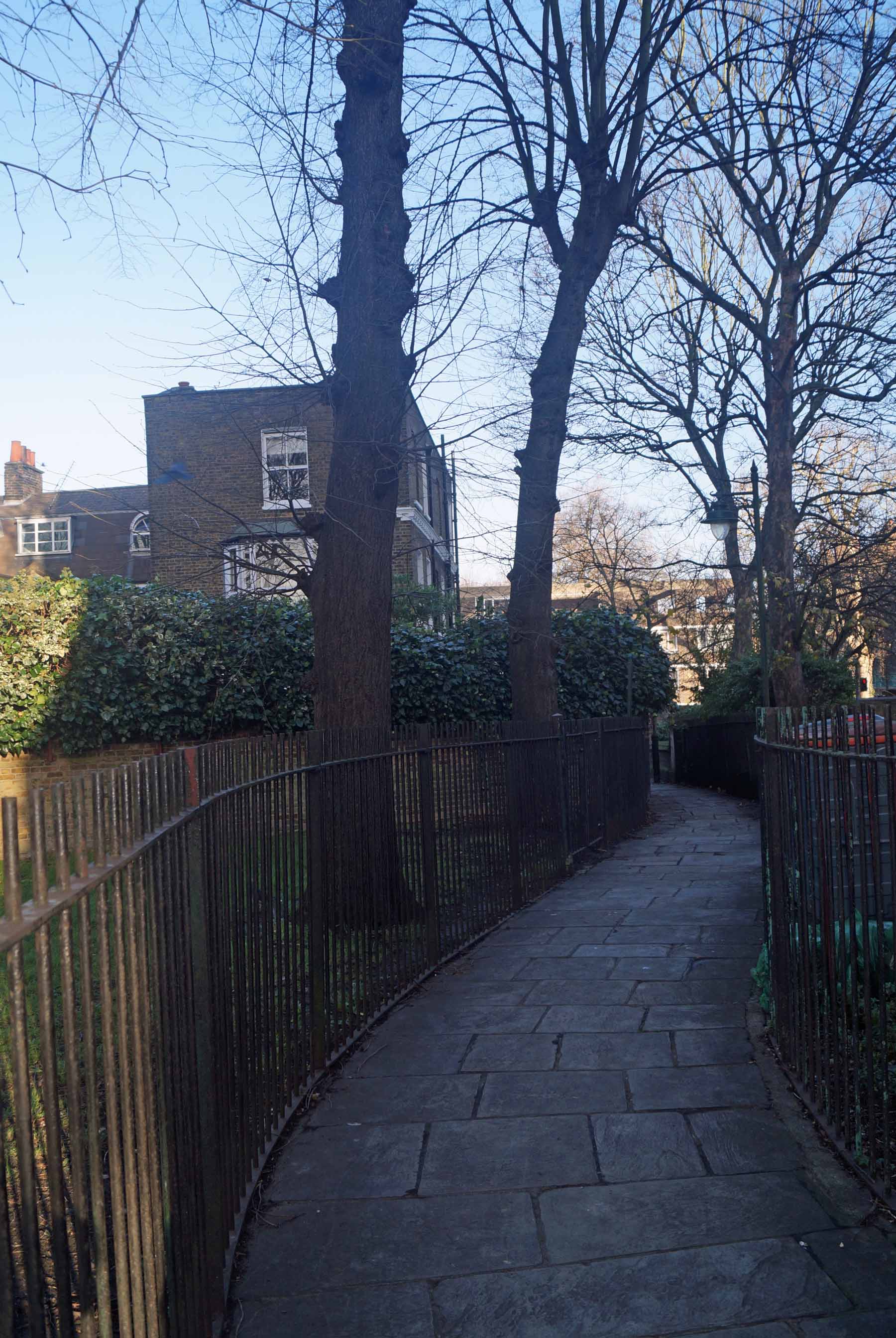
The path leading to St Giles Churchyard.

DSC03132

St Giles Churchyard is a beautiful quiet spot away from busy Camberwell.

DSC03130

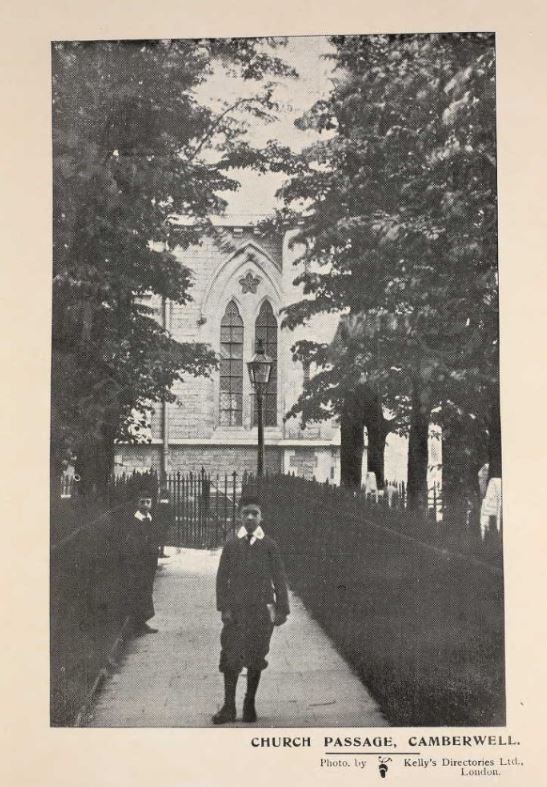
Camberwell Passage

A postcard showing Church Passage, Camberwell by Albert Flint, postally

dated 1904. And next, another photo c 1907

Church Passage Camberwell c 1907-1908 Kelly's Directories Ltd

DSC03129

DSC03112

DSC03108

DSC03107

DSC03106

Looking onto Camberwell Church Street.

DSC03105

DSC03082

DSC03088 Panorama2

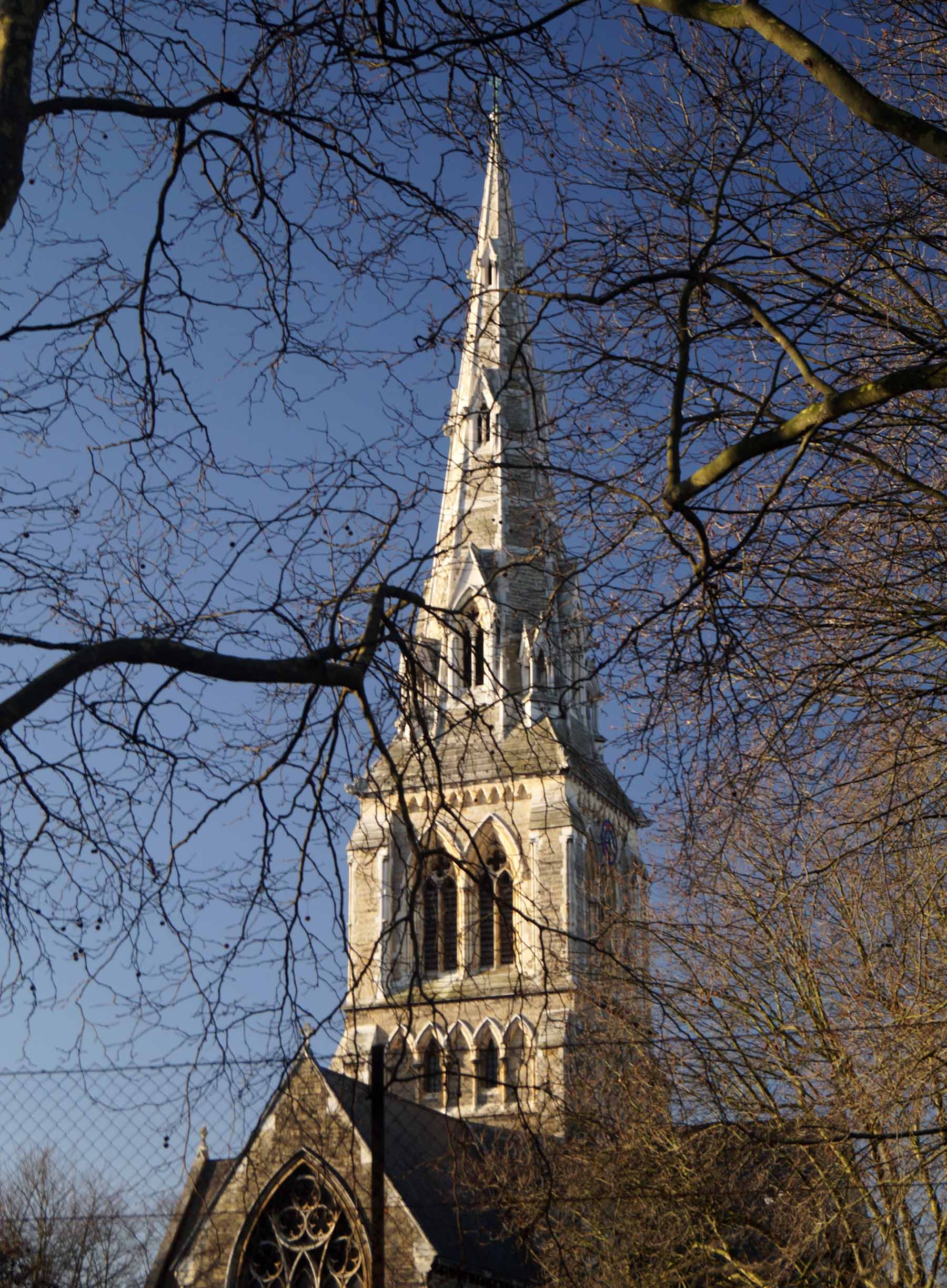
A lovely view of St Giles Church and the end of our walk.

Photos taken by Nick Stevens in January  2016. Here is a link to Nick’s website.

http://nick-stevens.com/

Posted in Denmark Hill, Streets & Roads, Walks | Leave a comment

Loughborough Park Congregational Church – part 3

Following some research at Lambeth Local History archives, we can add some further information.

We have another drawing by the architect and possibly builder of the Church, Mr WG Habershon, Esq.

Loughborough Park Congregational Church Architects drawing

This view is at the top of the letter sent out to well-wishers and potential subscibers to the building fund for the new Loughborough Park Congregational Church by the Rev. D.A. Herschell dated February 1st, 1860.

Clearly the house on the right was never built but the School at the back of the Church was built as we shall see further on in this post.

The letter was addressed from 3 Barrington Road, Loughborough Road, home to the Rev DA Herschell and family.

The Architect, Mr W G Habershon was both a developer and builder around Loughborough Junction. He was responsible for some of the Milkwood Estate and for the Milkwood Tavern.

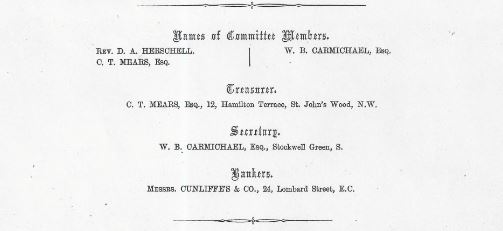
A committee was set up to administer the Building fund

Committee for administering the Loughborough Park Building Fund at February 1st ,1860

and in the same letter from the Rev. Herschell was a list of people who had already subscibed or pledged sums to the Building fund.

Contributions and plaedges to the Loughborough Park Congregational Church Building Fund

Included in this list is a generous donation from W.G Habershon of £30.00 and another Haberschon, Edward donated £5.00.

In his letter the Rev Herschell talks about his service assisting his brother the Rev Ridley H Herschell at Trinity Chapel, John St, Edgeware Road for nearly seven years when the calling came – as he puts it “My mind has, however , for some time past been impressed with the duty of seeking a sphere of usefulness more especially my own… ”

Having discovered and purchased the land at Loughborough Junction on a ninety-nine year lease at a modest rental of “£22.10s per annum.

His congregation at Trinity Chapel raised £133 as a testimonial, and contributed £500 to the building fund for the new Chapel.

He goes on to say that the Chapel is intended to hold 480 sittings, with a school and a vestry adjoining capable of accomodating 200 persons and that the cost of the entire building would not exceed £1,990 leaving a margin from the money of about £300 for lighting, heating, boundary-railing and road.

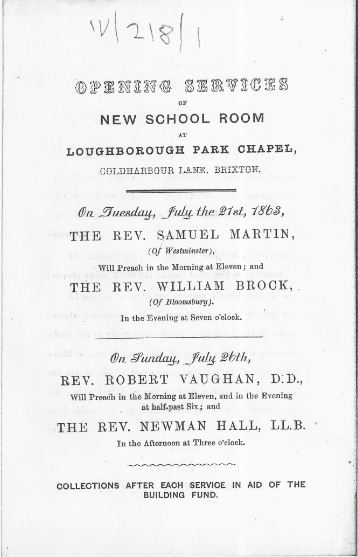
On 7th July, 1863, the Rev DA Herschell once again sent out a letter soliciting funds, this time to raise funds to build the school shown in the architects drawings above. They were looking to raise £600 of which £400 had already been pledged.

They organised  Opening Services with guest preachers with collections at the end in aid of the Building Fund.

Opening Services for the new Loughborough Park Congregational Church school

And finally the Church published a “short sketch of our past history as a church” just on the Rev DA Herschell’s 30 year service. It summarized some of the history of the church to date as well as the Rev Herschell’s life.

He was for seven years a missonary in Liverpool, then as we already know spent seven years assisting his brother Rev Ridley H Herschell at Trinity Chapel.

He spent his holidays in Missionary and bible work on the Continent.

In 1856 approx he founded the Society for Supplying Foreign Sailors in our Ports with the Bible. He was its Honorary Secretary all those years.  They circulated 549,746 copies of the Bible up till 1889.

In 1878, he erected Homes for Aged Christians of Evangelical Denominations, containing 20 sets of Rooms, costing about £4,000. They were known as Herschell Homes are still with us today in the terrace on Cambria Road, right hand side just before the Cambria Road viaduct.

The Rev Herschell was one of five of his brothers who became Ministers of the Gospel. Two entered the Church of England, one of whom was massacred in the Gordon riots in Jamaica. Three were Congregational Ministers, Ridley – the father of Lord Herschell and Louis and of course David.

The foundation stone of the Loughborough Park Congregational Church was laid on May 22, 1860 and it opened on October 23. In November that year a Sunday School was formed and in December the first members of the Church joined.

A management commitee ran the Church for 5 years until the first Deacons were elected.  The School premises were enlarged in 1863 and the Chapel enlarged in 1879.

In 1884 an assistant was engaged, the Rev. WH Richards was elected to the postion. He stayed until March, 1889 when he accepted the Pastorate at Farnham, Surrey.

A second enlargement of Sunday School and the Class rooms was undertaken in 1888. It gave them plenty of space for Lectures, Working Men’s Meetings, Band of Hope as well as the school.

In 1888, approx Mr John Alfred Joyce was chosen as Assistant Minister.

At this time the Herschells lived on Overton road and the Rev Joyce on Loughborough Road.

Continued in part 4

https://wordpress.com/post/loughborough-junction.org/1101

Sources

Lambeth Archives  in Minet Library.

Posted in Churches, Loughborough Park Congregational Church | Leave a comment

Denmark Hill – a poem by Grasshopper

Denmark Hill Poem Grasshopper posted by Maggot on the Urban75 camberwell forum

I came across this poem posted in the Camberwell news and chitter-chatter thread on Urban 75 forum in the London and the South East section. Posted by Maggot 2 December 2015.

Postscript 13 Dec 2017 – This poem was orginally published in the South London Press, January 1878.


Posted in Denmark Hill, Poetry, Streets & Roads, The Written Word | Leave a comment

Coldharbour Lane by Tom Robinson

A song from the Cabaret 79 Live LP released in 1982. You can listen to it and buy it on Tom’s  Bandcamp site

https://tomrobinson.bandcamp.com/track/coldharbour-lane-2

According to Songfacts based on an interview Tom gave to the NME it was composed in 1976 or earlier and originally titled Cruising. Check the link out.

http://www.songfacts.com/detail.php?id=17391

Posted in Loughborough Junction, Music, Streets & Roads | Leave a comment

Angell Arms on Loughborough Road

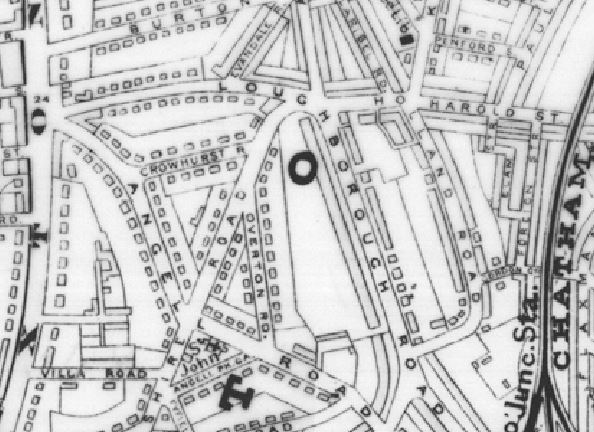
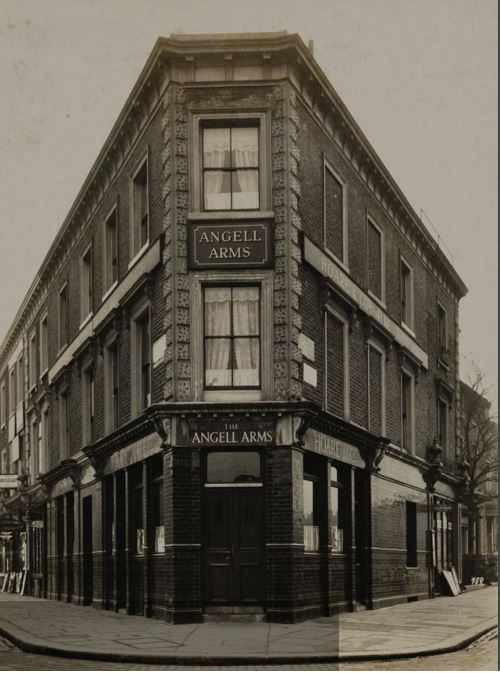
The Angell Arms was located at 2 Loughborough Road or formerly at 1 Angel Road. It was at the junction of Angell Road and Loughborough Road.

Extract from Stanfords Map of London, southern section 1894

This extract from Stanfords Map of London southern section, 1894 shows the location as the apex pointing to Brixton Road .

The 1st landlord was George Brooke who had the pub from 1869 and was registered again at the Pub in the 1871 census along with his wife Eliza D, daughters Eliza A and Florence and sons George, Benjamin, Thomas, Frederick and Edmund along with Louisa Brooke, George’s mother and a domestic servant Mary Hartfield.

The next recorded landlord was Valentine Day and his wife Emily with two sons Percy and John along with Emily’s Mother Clementine King.

On the 3rd September 1878, the SS Princess Alice made “Moonlight Trip” to Gravesend and back from Swan Pier near London Bridge. At 7.40pm she was on the return journey very close to North Woolwich Pier where many passengers were to disembark.  She was stuck on the Starboard side  by the SS Bywell Castle, a coal carrier.  She split in two and sank within 4 minutes. She was carrying a large number of passengers and over 650 died. Amongst the survivors though were (as recorded) Mrs Dee and a child residing at the Angel Arms, Loughborough Road. It was the greatest loss of life in any Thames shipping disaster.

For further information you can check out:

https://en.wikipedia.org/wiki/SS_Princess_Alice_(1865)

http://www.eastlondonhistory.co.uk/sinking-princess-alice/

Joseph Levi Beck is recorded as Landlord in 1901 with his daughter Ethel, 12 years and Harriet his niece aged 19 along with a domestic servant Alice Denton.

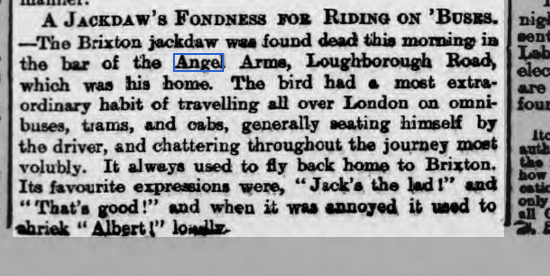
This newspaper report from the Yorkshire Evening Post 17th Sept  1902.

Yorkshire Evening Post 17th Sept 1902

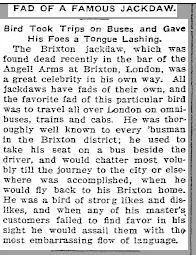
Castle Rock Journal 29 May 1903

This clipping was published in the Castle Rock Journal on the 29 May 1903, a newspaper from Colorado USA so the story travelled widely nearly a full year after the Yorkshire report.

A new landlord was recorded in 1919, Edmund John Wallis.

Angell Arms 2 Loughborough Road, 1940 National Brewery Heritage Trust

This photograph is part of the National Brewery Heritage Trust collection and was taken in 1940 by Charrington Brewery as part of a architectural survey of their pubs.

A landlady is recorded in the Post Office Directory in 1944 Mrs Olive Elder.

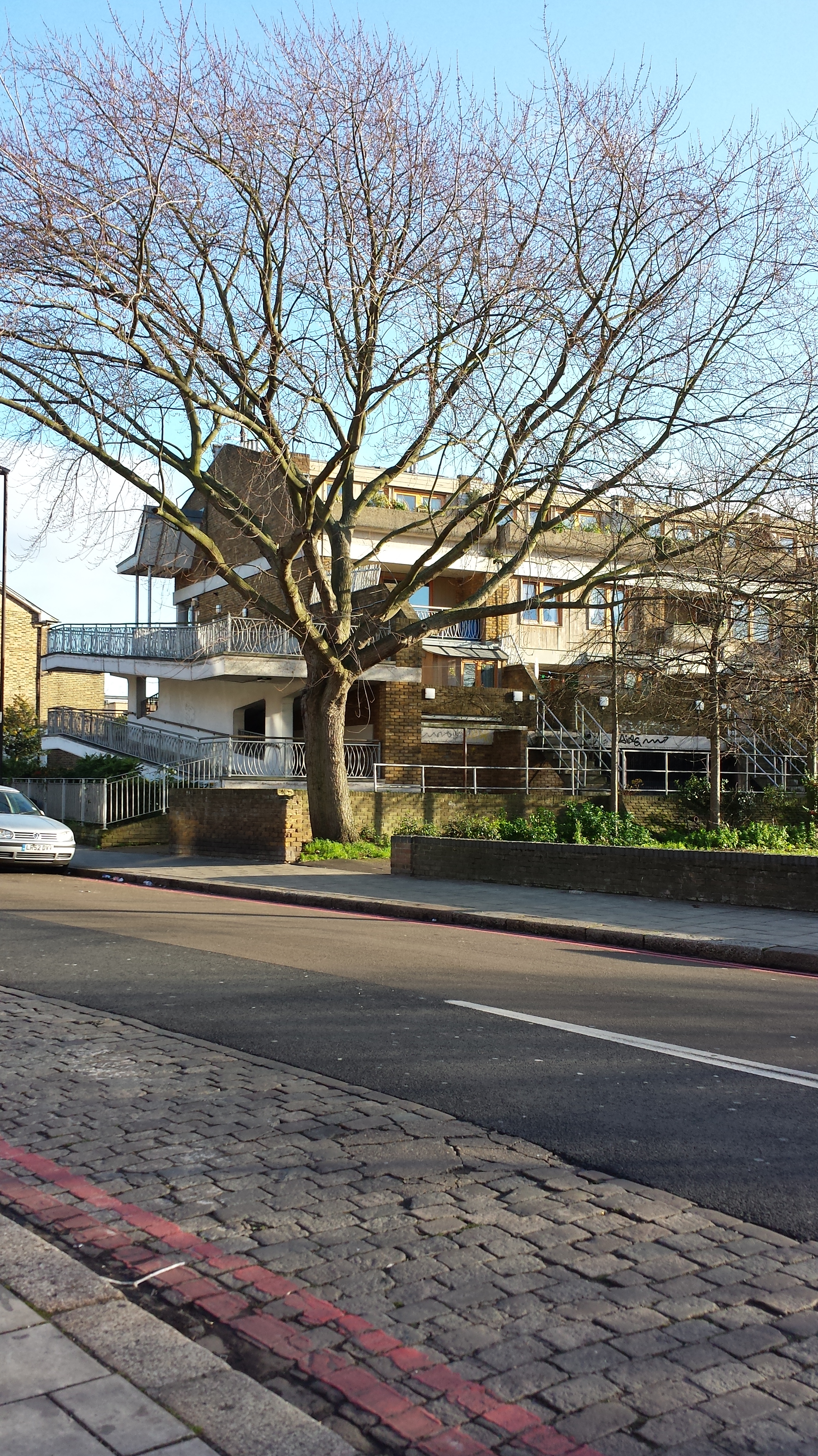
There was significant bombing during WW11 and a major amount of rebuilding was undertaken in the Loughborough Road area. That part of Angell Road is now a housing estate and  a small green area not very well looked after.

20151229_132859

Photo: Loughborough-Junction.org Blog, December 2015

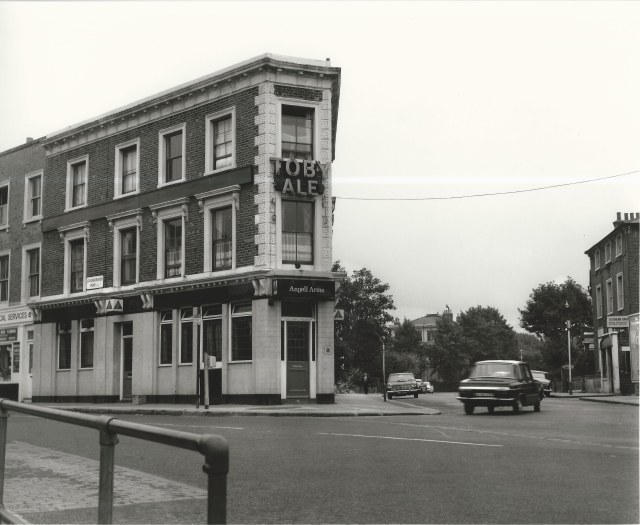
The pubology website has the Angell Arms closed in 1971.

Though this photo is available through Lambeth Library – Local History at Minet Library taken in the early 1970’s judging by the registration on the car parked on Angell Road. Thanks to Minet Library for making it available to me. Appreciated.

The Angell Arms , early 1970's Lambeth Local History, Minet Lib

http://www.pubology.co.uk/pubs/6028.html

Lambeth Local History at Minet Library

.


Posted in Loughborough Junction, Loughborough Road, Pubs, Streets & Roads | Leave a comment

The Salvation Army in Loughborough Junction

The Salvation Army commenced work in Loughborough Junction on 6 August 1891, (taken from a letter dated 1996 from The Salvation Army Library on Denmark Hill to an enquirer) as an outpost from the Camberwell Corps. Initially it did not have it’s own officers and was administered from Camberwell.

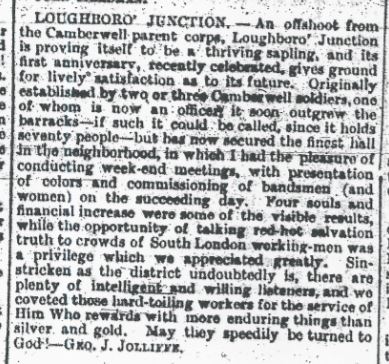
Though this extract from the War Cry dated 21 June 1890 suggests it was active in Loughborough Junction before the officially recorded date.

War Cry 21 June 1890

By 1892, it had received Corps status and officers appointed.

Early officers include Captain Crown and Lieutenant Jackson appointed January 1894, Warren Taylor and Lieutenant Cooper in December 1894, Dawson Ivison in March 1895, Stone Miller in November 1895, Lieutenant Partner in April 1896 and finally in this group Cory Onslow in May 1896. Ivison, Miller, Partner and Onslow were all women.

There is no record in Salvation Army Loughborough Junction Corps file (in truth, there is very little in the file) of the Hall mentioned in the above War Cry report but I assume it might well have been Loughborough Hall which seems to have been the “finest hall in the neighbourhood”. The Brixton Society in an article about Loughborough Hall state the Salvation Army used Loughborough Hall for meetings in 1904.

http://www.brixtonsociety.org.uk/2014/07/13/loughborough-hall-the-hidden-history/

extrach from OS 1893-96

A further report  in the War Cry dated from 23 July, 1892 rejoicing at a drunk coverting.

War Cry 23 July 1892

And this report from 17 September, 1892
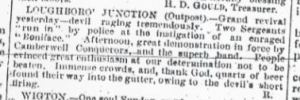
War Cry 17 Sept 1892

Shows that there was great opposition to Salvation Army work in those days by brewers and publicans. For more reading take a look at this wikipedia article about the Skeleton Army and the Salvation Army version.

https://en.wikipedia.org/wiki/Skeleton_Army

http://www.salvationarmy.org.uk/history-opposition

R Mudie-Smith in his statistical study of attendance at Worship across London : The Religious Life of London published by Hodder & Stoughton in 1904 , recorded average Sunday congregations at The Salvation Army services in Loughborough Hall of 73 at the morning service and 222 at the evening service.

The next information I have is the appointments of Capt Ethel Parks and Lieut Miriam Banks in 1921.

Update, May 2024. We now have a photo from the Brixton Illustrated Press published Feb 1927 of the New hall of the Salvation Army at Loughborough Junction built at a cost of £2,800 and opened by Lady Spicer. Ref. Lambeth Archives: 14912

New Hall of The Salvation Army Feb 1927 Brixton Free Press Lambeth Landmark 14912

We also have the photocard of the Loughborough Junction Citadel Band in 1930, looks to be taken on the steps of the Salvation Army building on Denmark Hill.

phot6118 Loughborough Junction Salvation Band 1930

We know who officered Loughborough Junction Corps for a few years in the early 1930’s because they were subsequently promoted to senior appointments. Sture Larsson was born into a Swedish Salvation Army family and married Flora Benwell, also from a Salvation Army family in 1934.

Sture and Flora Larsson , wedding day 1934 with Henry W Mapp who officated

Photo taken at their wedding officiated by Henry W Mapp who was Chief of Staff in the Salvation Army from 1929-1937. Essentially the number two appointed by The General of the Salvation Army.

Sture rose to prominent position in the Army as International Secretary for Europe while Flora was a prolific author writing many articles for Salvation Army publications and books of prayer poems.

Sture and Flora’s son John Larsson became the 17th General of the Salvation Army 2002-2006.

The Salvation Army obviously felt comfortable with their position in Loughborough Junction as they applied to register for solemnizing marriages in 1937.

The London Gazette 27 April 1937

The London Gazette, 27 April 1937.

In the Loughborough Junction file at the Salvation Army library was this photograph of the Salvation Army Loughborough Junction hall in Wanless Road. No record of when they moved in or indeed when they left but as the above shows they were ensconced in Wanless Road in 1937.

Salvation Army Hall Wanless Road date unknown from SA Library, Denmark Hill

Photo is undated. From the Salvation Army Library collection.

Here is what it looks like in 2015.

20151211_085223

Photo: Loughborough-Junction.org blog

Another soldier of the Loughborough Junction Corps was Albert Orsborn who was General from 1946-1954. This report from the War Cry dated 31 August 1946.

The War Cry, August 31,1946

Albert Orsborn spoke again at the LJ Corps in November, 1949.

12 Dec 2024, Reader Lynda Payton got back in touch with her Mother and Father’s names, Alan and Evelyn Payton. They were Captains of the Loughborough Junction Corps in 1954. Later moved on to Wallasey then Newbury.

And there the story stops. In the letter mentioned above, the Hall on Wanless Road is referred to as still being owned by the Salvation Army but going on to say …”although there hasn’t being any Army activities there for some time”.

As for today, it is used by a Local Christian Assembly and its Pastor Peter Chandler.

Thanks to Linda Farrow nee Wood who has allowed me to post this photo of the Loughborough Junction Salvation Army Corps singing company dating from 1966 or 1967. Linda is to the right of Mrs McKenzie at the back.
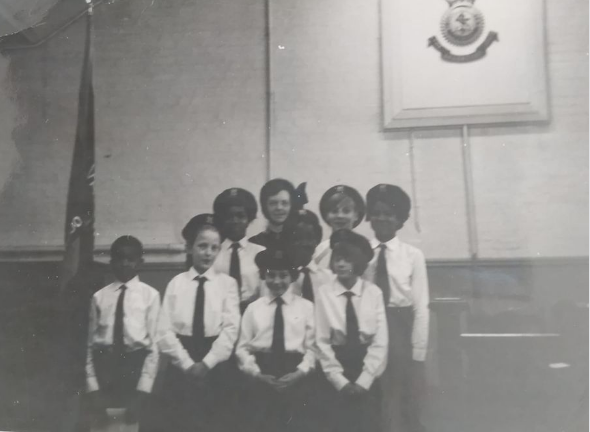
Salvation Army LJ 1966 1967 Linda Farrow

This now confirms that Salvation Army Loughborough Junction on Wanless Road was open in 1966-1967. Thank you Linda.

If you have any further information about the Salvation Army, Loughborough Junction Corps, I would be glad to hear from you.

My grateful thanks to all in the Salvation Army Library/Museum up on Denmark Hill who helped with my research and did some scanning and Photocopying for me.

 

Posted in Churches, Loughborough Junction, Salvation Army, Streets & Roads | 11 Comments

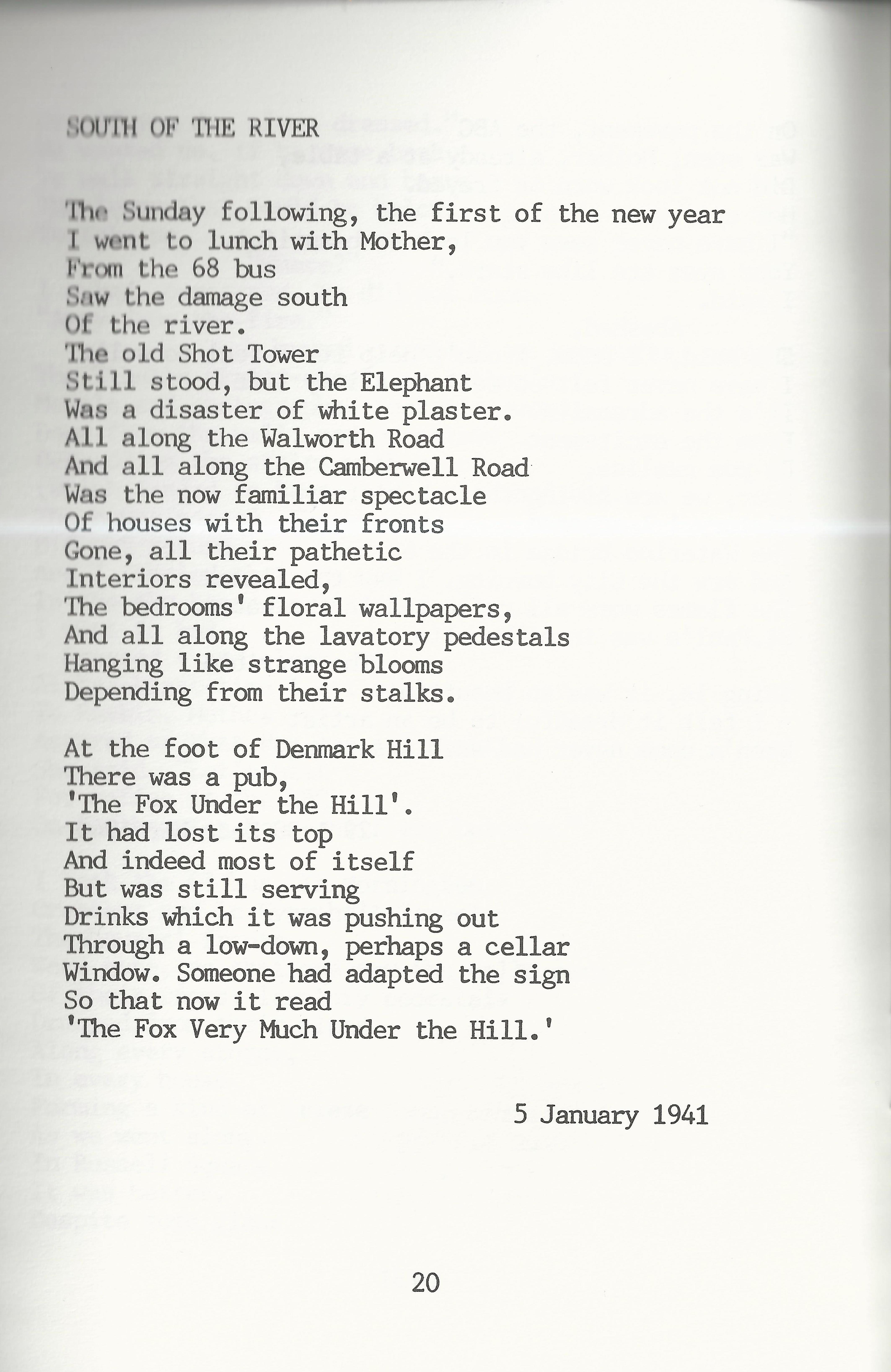
South of the River: a poem by Jean Overton Fuller

In her collection of poems titled Bomb Saga later published as The Bombed Years (1995) we have the following poem:

South of the River

South of the River by Jean Overton Fuller

You can listen to Jean Overton Fuller read the complete Bomb Saga at this website

http://www.jeanovertonfuller.com/poetry-essays.html

Journeys to Denmark Hill can be heard at 15 minutes 50 seconds.

Though in The Bombed Years the poem South of the River as you see above was reworked for the Audio tape as Journeys to South London.

Jean Overton Fuller was a British author (7 March 1915- 8 April 2009) with one might say a very interesting life. Check out the website memorial

http://www.jeanovertonfuller.com/

arranged and compiled by Susan Waters.


Posted in Denmark Hill, Poetry, The Written Word | Leave a comment

Loughborough Park Congregational Church – part two

Thanks to a couple of people who got in touch with Loughborough-Junction.org  Blog we have some more information about the Chapel.

Cal posted in offering three new ministers: Rev W.M. Carrington from 1912, below is a photo of the Rev Carrington taken in 1912.

Rev WM Carrington , 1912.JPG

Followed by Rev E Scott who died in 1927. He was succeeded by Rev William South from October 1927.

Cal also pointed to a newspaper report in the Yorkshire Evening Post dated 7 August 1926 showing the Chapel in financial trouble

Yorkshire Evening post 7 August 1926

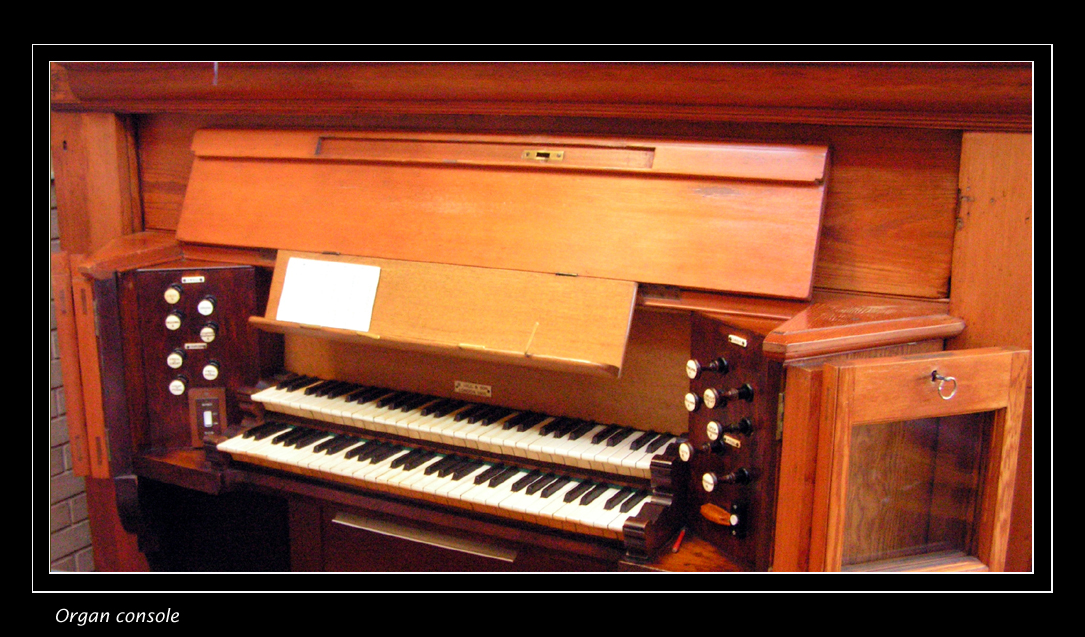
And Guy contacted the blog about the Organ installed in the Chapel in 1903, largely undamaged by the blitz, and transferred to Gerrards Cross Congregational Church in 1946. It was later moved to the new Gerrards Cross building in 1980-82 and is still in use today.

Guy kindly sent three photos of the Organ.

KONICA MINOLTA DIGITAL CAMERA

KONICA MINOLTA DIGITAL CAMERA

KONICA MINOLTA DIGITAL CAMERA

The organ pictured above was built for Loughborough Park Congregational Church in 1903 by Wm. Hill & Son as job number 2299. It was designed by Ernest Banfield, Architect of 11 Victoria Street. During the blitz the church was damaged and the Organ was removed for storage in Grenfell Club nearby. It was moved to Gerrards Cross CC in 1946 by the same company though after merger now known as Wm Hill & Son and Norman & Beard Ltd.

In tracking down the history of the Organ Guy through a letter in the Reform magazine asking for any information about the organ or Loughborough Junction Congregational Church had some interesting responses.

Mr Alan Forbes from Highgate responded with information about his wife’s great grand-father who was George Budworth Sharp. He was Choirmaster and Organist at LPCC for 42 years. In 1888, George lived at 74 Hinton Road. They have some original music, handwritten for the church choir, dated June 1913 inscribed “Composed on completion of 42 years service as Organist of Loughborough Park Congregational Church Brixton SE” This would take his first attendance back to 1871.  He met his wife through her membership of the church choir. He passed on in 1922.

Harry Fisher also contacted  Guy with his memories. He began as a member of the Senior Sunday School in 1912 , in all over 200 children in the senior school and a 100 children in the junior school attended Sunday School in those days.

In the early 1920’s he took on the job of pumping the organ possibly succeeding Peter Banfield son of the architect mentioned above who designed the Organ. Ernest Banfield was a deacon and the Church Secretary for many years.

He talks about the period 1941-42 when partly due to Blitz damage but mostly due to dwindling congregations because of conscription and evacuation the decision was taken to close the congregation in 1941 and transfer the remaining congregation to Herne Hill Congregational Church now the United Reform Church.

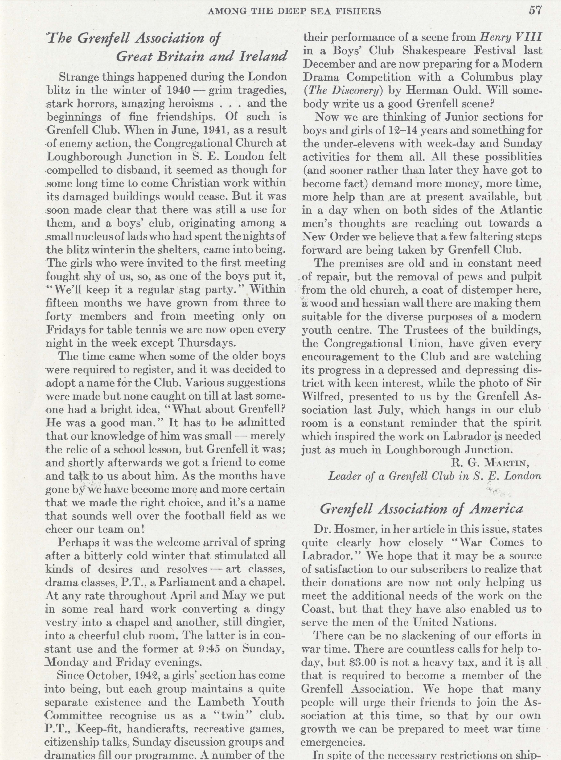
He also mentioned the Grenfell Club which was a youth club founded by the Rev R,G, Martin  known affectionally as RG to all the congregation. It met in Church premises.

The Grenfell Association of GB & Ireland July 1943

R Mudie-Smith in his statistical study of attendance at Worship across London : The Religious Life of London published by Hodder & Stoughton in 1904 , recorded average Sunday congregations in the LPCC of 139 at morning worship and 302 at the evening service.

The last incumbent minister was Rev R Crossley Scott who transferred onto Emmnauel CC, East Dulwich.

Finally, Cal also pointed to an interview with Rev TF Touzeau with Charles Booth ref B303, pages 22-39. Unfortunately this interview does not form part of the digitised Archive. If anyone has a copy, I would be grateful.

continued at

https://wordpress.com/post/loughborough-junction.org/1017


Posted in Churches, Loughborough Junction, Loughborough Park Congregational Church | Tagged , | Leave a comment

How well do you know Loughborough Junction?

A 2016 Photo competition

A selection of photos each from the Loughborough Junction  & Coldharbour Lane area. Just for fun. Nine photos follow. How many can you identify?

One

20151127_121233

Two

20151127_121605

Three

20151128_113110

Four

20151128_113242

Five

Capture

Six

SONY DSC

SONY DSC

Seven

IMG_1678

Eight

IMG_1660

Nine

20151130_084349_resized

You can enter by adding a comment with your answers by number.

Posted in How well do you know Loughborough Junction?, Loughborough Junction | Leave a comment

Lord Stanley

When developers started building the mass housing in Loughbourough Junction they often included Public Houses in their plans and one such was the Lord Stanley at 31 Hinton Road.

Extract from OS Map 1894-96

Extract from the OS map 1894-96

It was taken on by George Ferris in 1869 who advertised this in a number of advertisements in the South London Press, the following from the 15 May 1869 issue.

South London Press 15 May 1869

There was, though a hiccup in getting his license for the Lord Stanley as he was refused as this report in the Morning Advertiser 01 April 1869.

Morning Advertiser 01 April 1869 Lord Stanley

You can find out more about the Mannings Murder on this link

http://www.capitalpunishmentuk.org/mannings.html

On 29 September 1870 an advertisement for a Potman was placed in the Morning Advertiser .

Morning Advertiser 29 September 1870

The excellent website http://www.pubshistory.com lists a change of Landlord in 1878 as Joseph Harbour became the licensee according to the Surrey Directory and again in 1896 this time from the Post Office Directory. Succeeded by Mrs I Harbour in 1904.  Followed then by Norman Geo. Nursey in 1911, Arthur Valentine Col in 1919, Joseph High Elliott in 1938 and Chas E Hills and Chas E Keating in 1944.

Added: January 2016: Whilst browsing once again through the Lambeth Landmark website, featuring a part of the Lambeth Local history collection held at Minet Library on Knatchbull Road I came across this photograph. It features the top half of the Lord Stanley behind the wagon, taken from the north looking south down Hinton Road with Wanless Road branching off left. It is dated circa 1905 and came from an album of Bovril bill posting sites.

Lord Stanley, Hinton Rd c1905 Lambeth Landmark

http://landmark.lambeth.gov.uk/

In early 2012, I had come across a early photo of a charabanc outing from the Lord Stanley on 28th June, 1925 on a Flikr account Eric06. By the time I went back it had disappeared but after I contacted him, he very kindly e-mailed it to me. Thanks Eric.

Lord Stanley outing 1925

This would be during the time of Arthur Valentine Col. I have absolutely no way of knowing but the gentleman standing on the far left with the cigarette just looks like a pub landlord.

From the very fine website/forum Urban 75 lost pubs section @ the following link

http://www.urban75.org/brixton/bars/lord-stanley-hinton-road-se24.html

A contributor Gill recalls the pub during the war being run by Harry and Daisy Buck, helped by various members of the Buck family. She says the pub suffered bomb damage during the war but continued in operation.

In 1940, as part of a Charrington Brewery survey the following photo was taken.

Lord Stanley, Loughborough Junction,1940 31 Hinton Road, National Brewery Heritage Trust

It now is part of the collection of the

http://nationalbreweryheritagetrust.co.uk/

The following photo of Tram 48 taken in January 1952 is part of the B. Maguire collection found on Chris Stanley Flickr.

https://www.flickr.com/photos/rw3-497alh/

tram-route-48-in-january-1952-from-the-b-maguire-collection-on-chris-stanley-flickr

In the late 1970’s and early 1980’s on a number of occasions I had a drink or two in this pub with my friend Jeremy. It was very pleasant but quiet, I think the landlords name was Harry though not 100% sure. And I remember a bird cage.
What I can’t remember is whether the housing next to the Lord Stanley on Hinton Road back to Wanless Road was there or if it was a bomb site.

The pub closed around 1999 and was replaced as so many are these days by a new housing development called Lord Stanley Court.

Lord Stanley Court ,view showing the corner of Hinton Road and Wingmore Road

Posted in Loughborough Junction, Pubs | Tagged , , , | 4 Comments