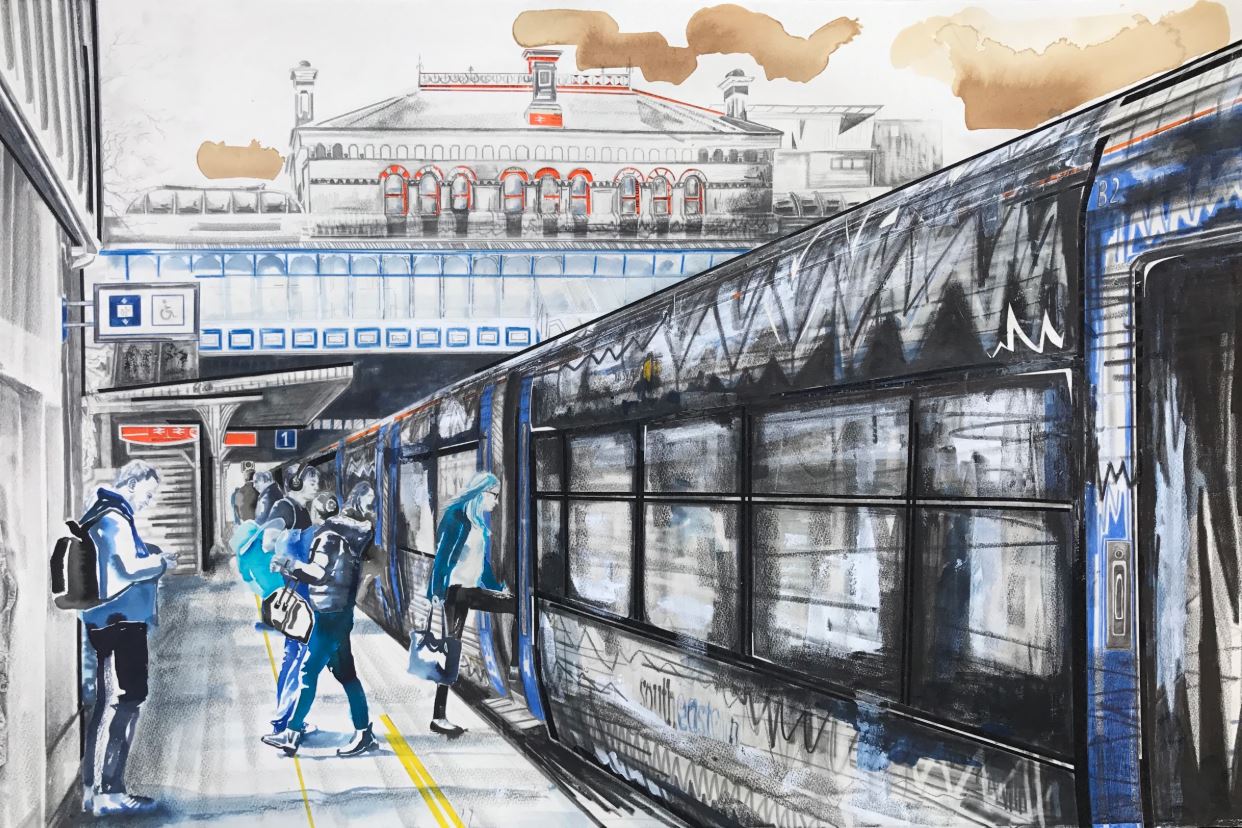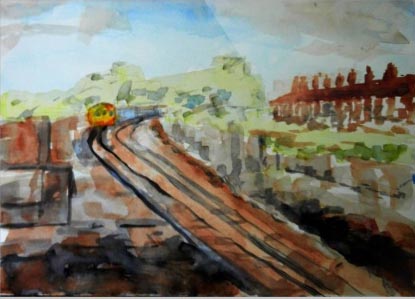
This painting , a view from Loughborough Junction Train Station was painted in 2012.
It is available from Imagekind on this link
https://www.imagekind.com/loughborough-junction_art?IMID=d74fdd75-fcc0-40a0-951a-82d1dc662cd4

This painting , a view from Loughborough Junction Train Station was painted in 2012.
It is available from Imagekind on this link
https://www.imagekind.com/loughborough-junction_art?IMID=d74fdd75-fcc0-40a0-951a-82d1dc662cd4
I am researching/collecting information about the Camberwell Palace for an eventual publication. I would be very grateful for any material.i.e. posters, programmes and photos you may have. Scanned versions, are fine and you can send them to loughboroughjunction@gmail.com
I would also like to hear your memories of visiting the Camberwell Palace for a show, pantomime or even messing around inside after it was closed.
Thanks very much , John
Part of the Southwark Art Colllection, GA1010.
This painting of Camberwell Palace is by William Keddie Forrester dated 1957. He lived in Dulwich and painted many scenes from the local area.
It was located on the corner of Denmark Hill and Orpheus Street, opposite the Post Office.

It was built in 1898/1899 and closed in 1956 and was demolished shortly after. It was mostly a variety hall and in it’s later days featured girlie shows mixed with variety acts. A sad end to a fine looking theatre.
A shop window poster for Camberwell Palace for week commencing 15th May 1950.

Just for clarification, the Pub shown on the right was the Bulls Head later renamed The Metropole after the Metropole theatre on the corner of Denmark Hill and Coldharbour Lane was built in the 1890s. It was demolished in the 1920s for at first the Bijou picture palace then of course the Post Office. More on the Bulls head here
https://loughborough-junction.org/2016/04/10/the-lost-pubs-of-denmark-hill-the-bulls-head/
This distance marker was recently uncovered on Denmark Hill.
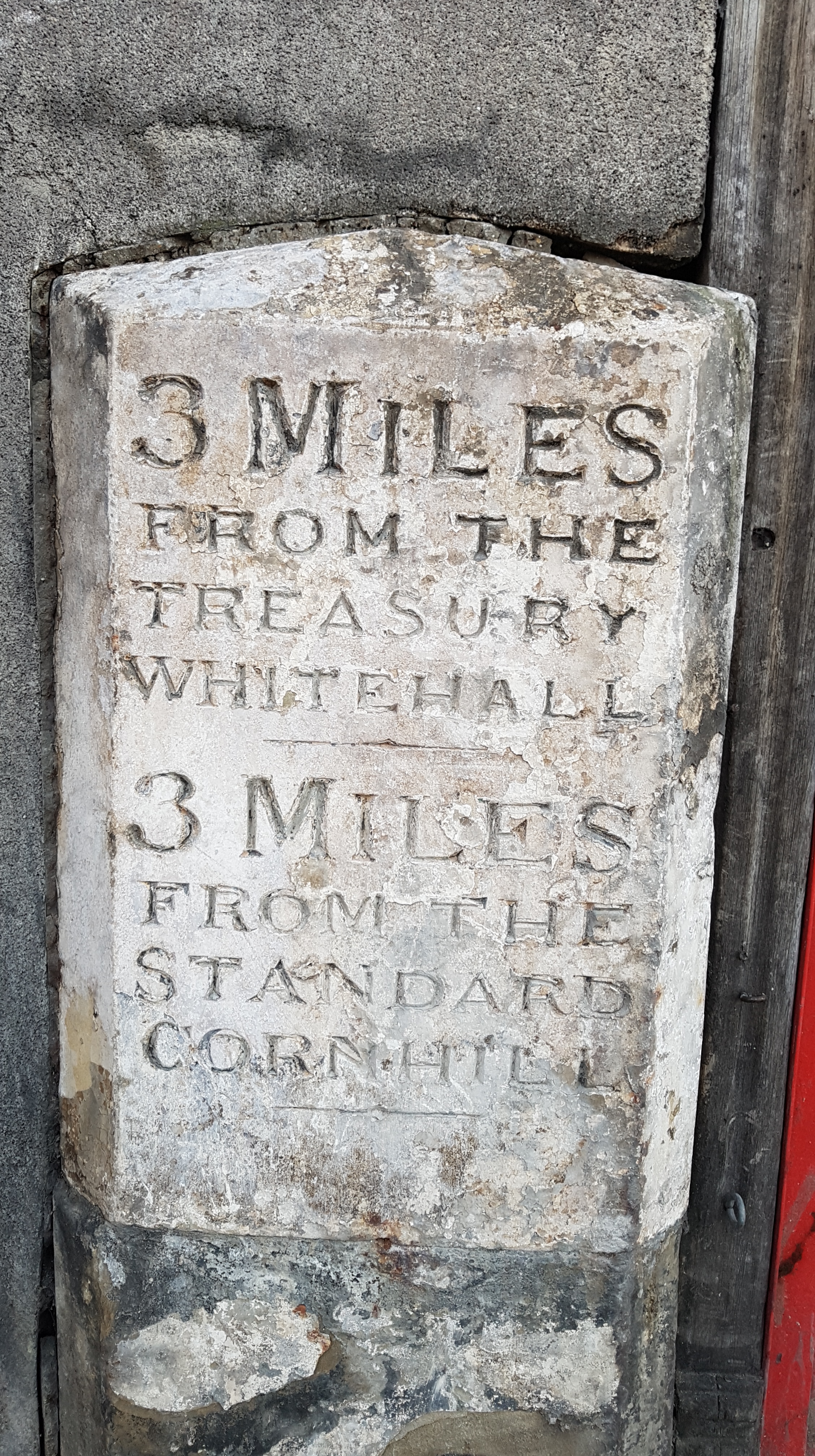
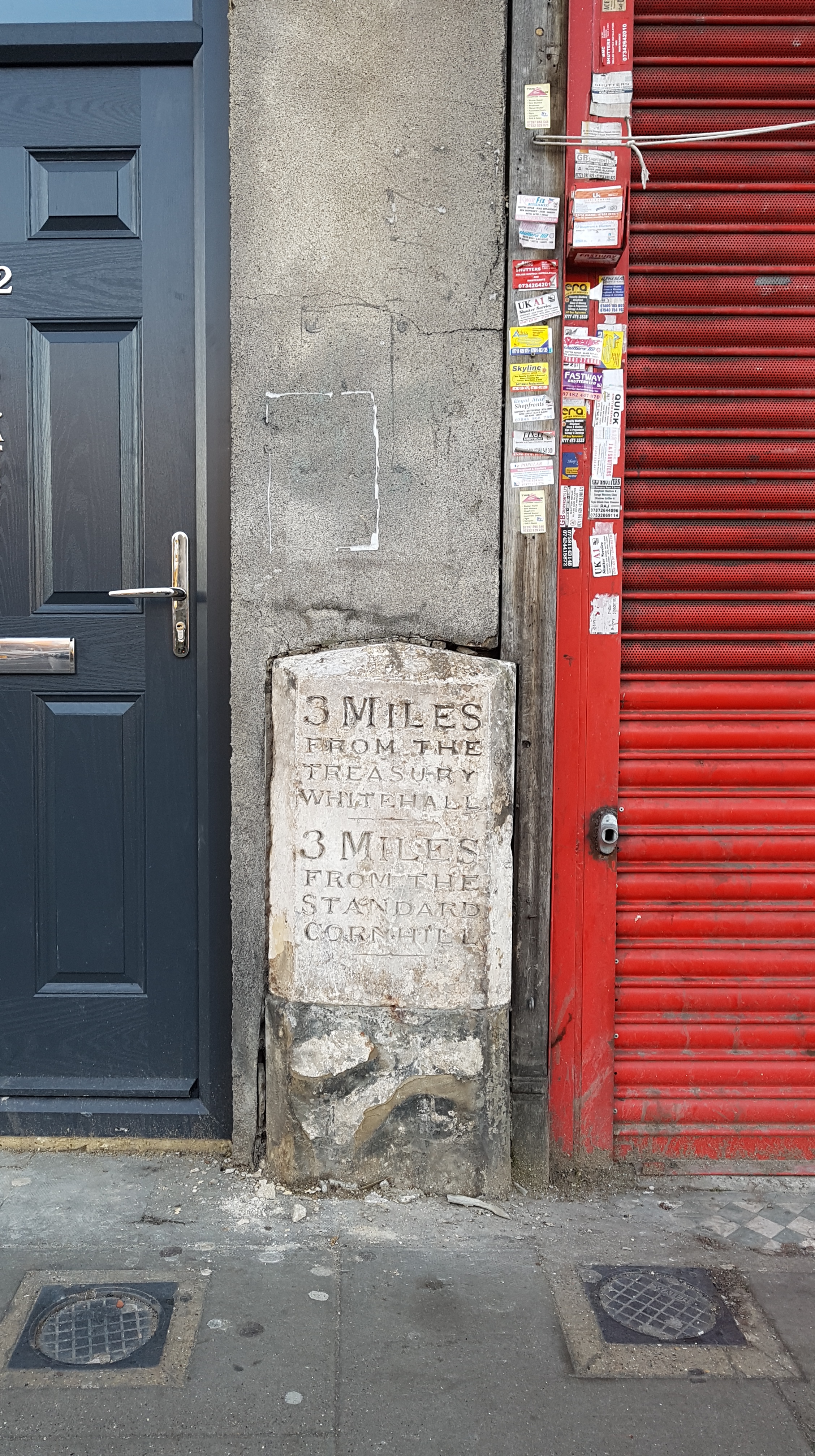
Located between what were Swiftclean and the Butchers shop at 10 & 12 Denmark Hill. Previously covered over with render as seen in the photo from Google streetview dated October 2015.
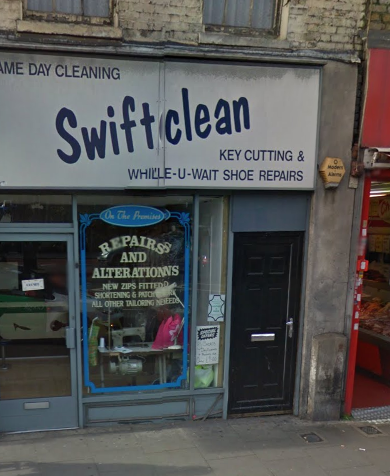
And this is how it was photographed for the Milestone Society in 2009.
https://www.msocrepository.co.uk/
Reference: SY_LODU03
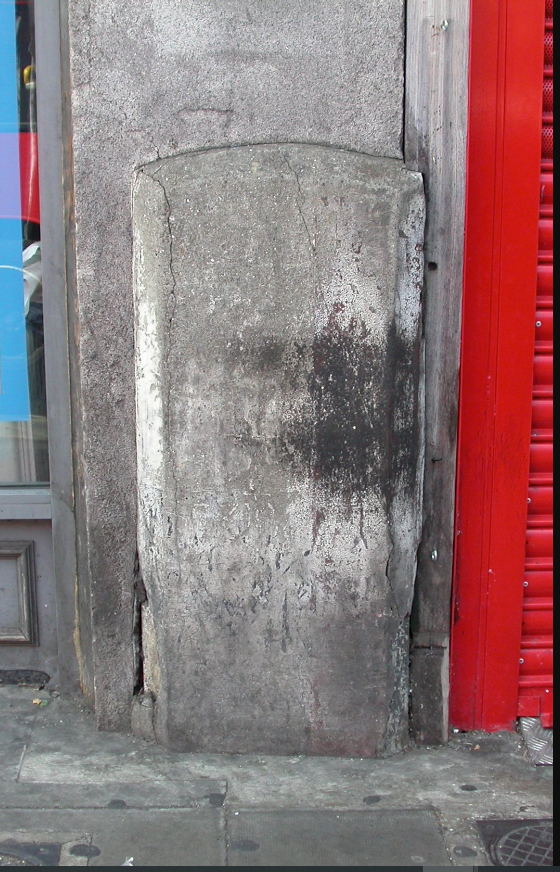
The Standard in Cornhill was according to Wikipedia ” the first mechanically pumped public water supply in London, constructed in 1582 on the site of earlier hand-pumped wells and gravity-fed conduits. The mechanism, a force pump driven by a water wheel under the northernmost arch of London Bridge, transferred water from the Thames through lead pipes to four outlets. The service was discontinued in 1603. This became the mark from which many distances to and from London were measured and the name still appears on older mileposts
This plaque appears at the site and is at 59-60 Cornhill. Taken from
https://www.londonremembers.com/memorials/cornhill-standard
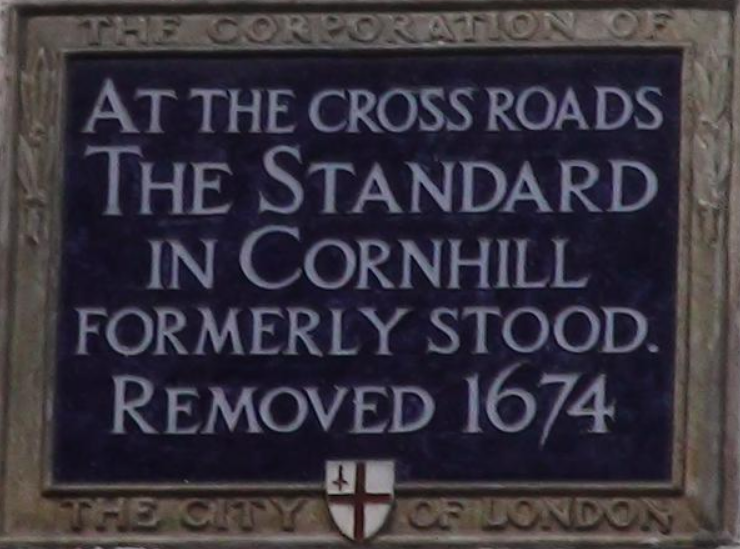
Congratulations to whoever spent time and effort in removing the render.
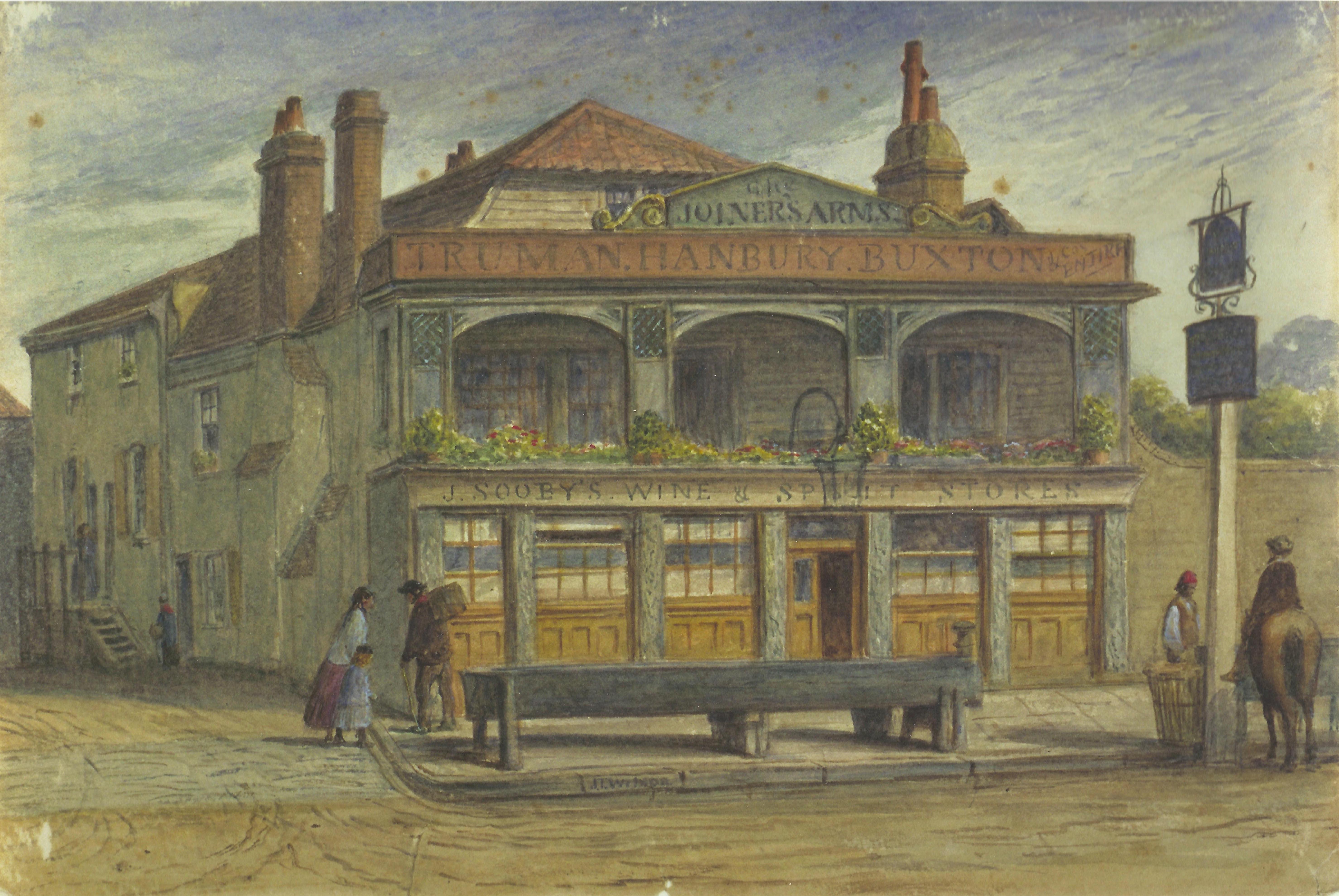
This painting by JT Wilson, dated 1850 is part of the City of London Metropolitan collection.
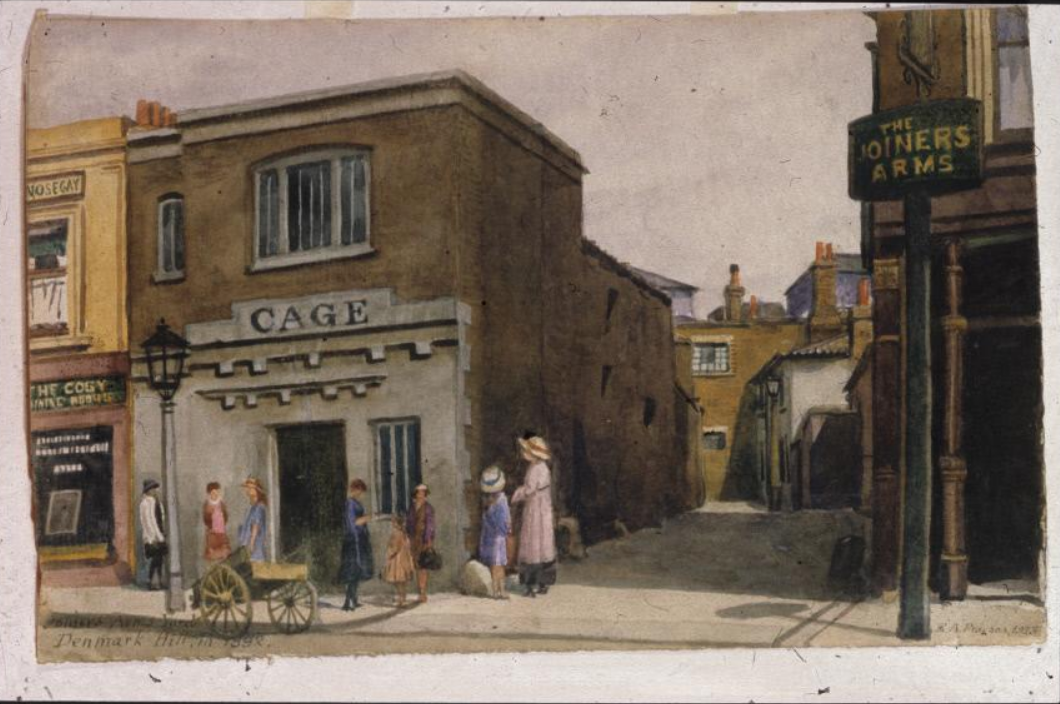
This painting shows The Cage and the Joiner’s Arms and was painted by Edward Arthur Phipson in 1922. Part of the Southwark Council Art Collection.
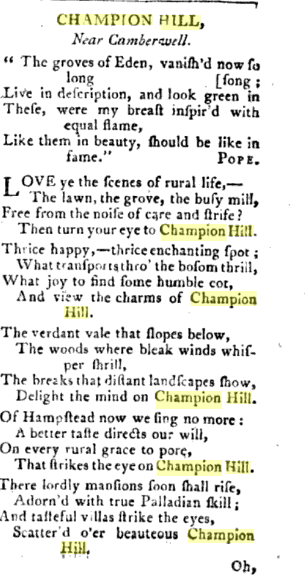
Published in The Lady’s Magazine in 1796 this poem is credited to M.


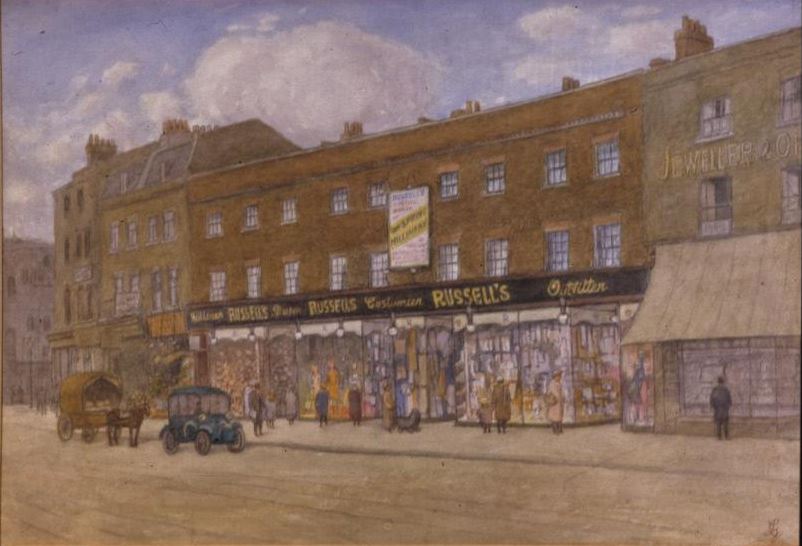
Painted in the 1920s and attributed to L.G., this painting is part of the Southwark Art Collection, GA 1091.
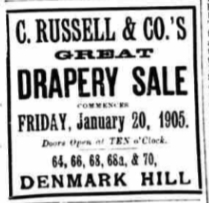
It shows the Denmark Hill shop of Russell & Co, who were linen drapers. They opened their business in the late 1870s at 66 & 68 Denmark Hill. They suceeded in business from Hills and Bamford who opened their store in 1857 at 5 & 6 High Street later 66 & 68 Denmark Hill. In 1894, Russell & Co expanded to 64 & 66 & 68 & 70 Denmark Hill. The business lasted until 1967 when the stores were divided back into three individual businesses, the National Provincial Bank, later called Natwest, Skilbeck Dry Cleaners and the wonderfully named Humpty Dumpty restaurant later to become the Golden Grill.
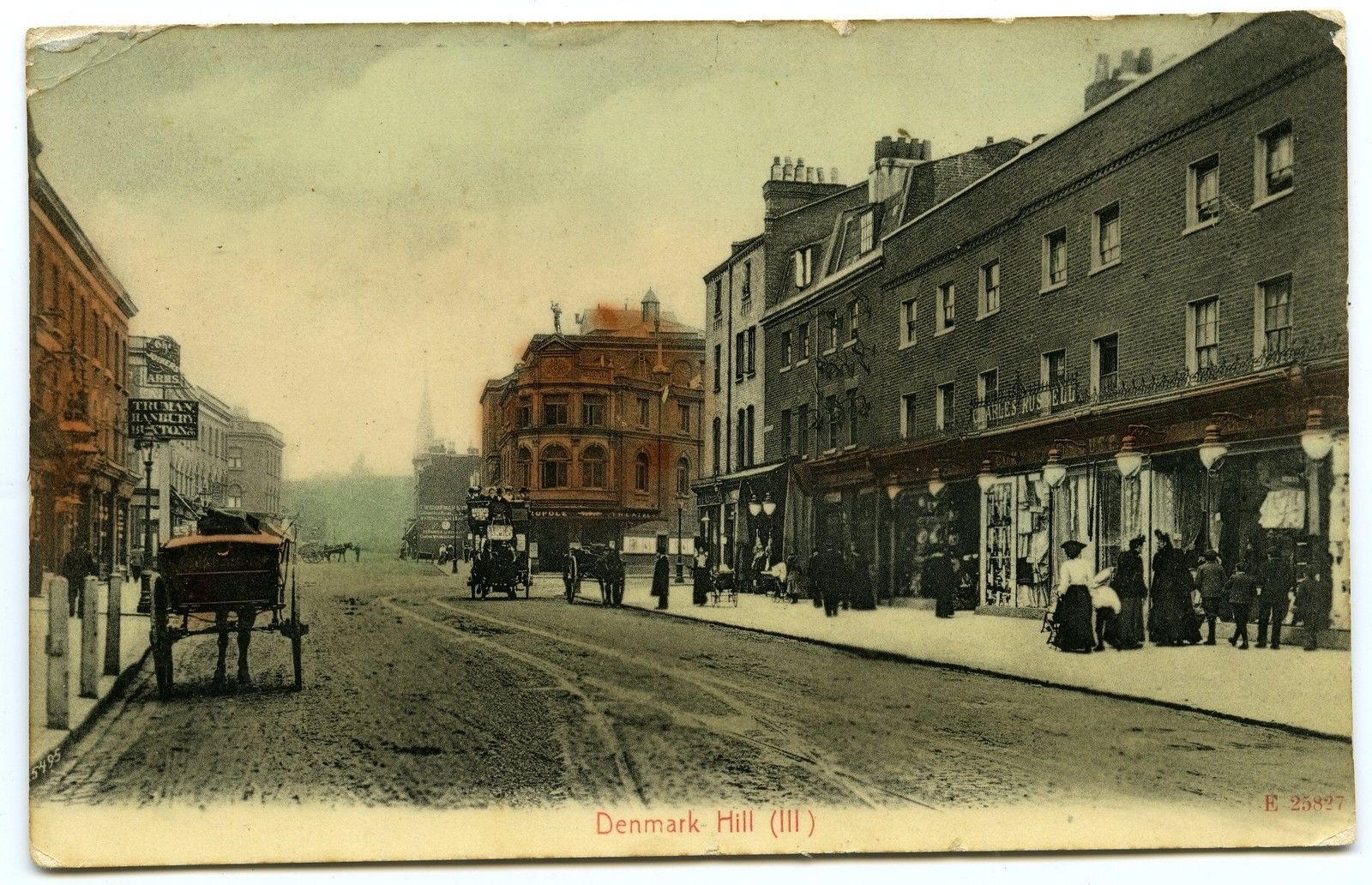
This postcard dates from before 1908 and shows rather elegant ladies & children outside Russells.
From the South London Press 14th January 1905 is this advertisment.
The following advertisment was copied from a 1950s Camberwell Borough Yearbook.

Love to hear from anyone with memories of Russell’s.
Credits
Southwark Art collection
British Newspaper Archive
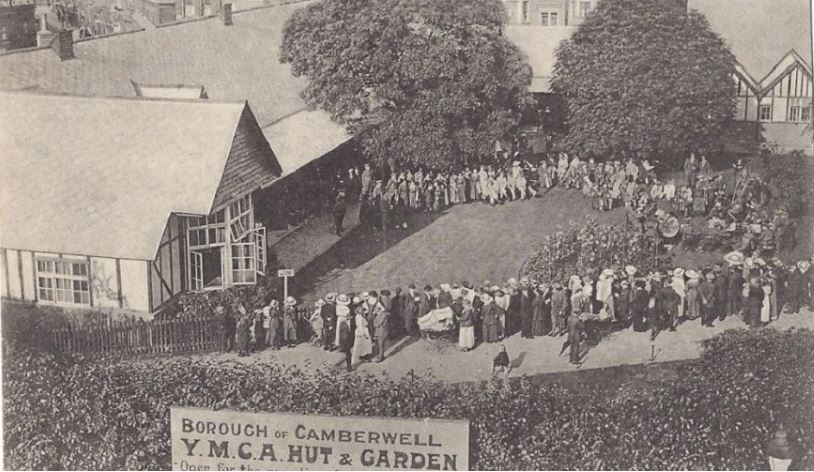
The YMCA first started providing recreation tents to our Armed Forces in the summer of 1901, for the muster of the 1st Lancashire Fusiliers at Conway, North Wales. In the beginning they were mostly tented canteens for annual manoeuvres of the Territorial Army.
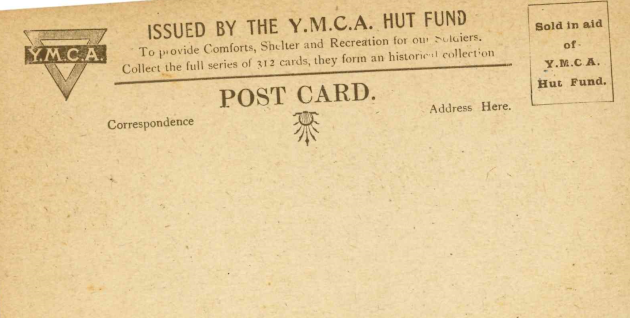
At the outbreak of WW1, the YMCA was asked to provide recreation centres, known as huts, 370 alone in France and Belgium and very many more all over the UK and the Commonwealth. Servicemen could buy cigarettes, coffe, cocoa and cakes. The larger versions usually had a reading room for books and the latest newspapers and magazines. And all kinds of games. The YMCA also supplied notepaper, envelopes and postcards for letters home. By August 1918, British and Allied soldiers had written some 200 million letters or cards home.
What we know about the Camberwell Green YMCA is taken from a report written by Mr AT Dyer, Hon secretary of YMCA Camberwell for his bosses and a description of the Hut by Mr Alfred Weeks. Mr Dyer had started as a voluntary worker working through the night three times a week guiding soldiers from station to station through the blackout. In 1915 he was involved in raising funds for new huts in France. Despite the refusal of the Borough of Camberwell to co-operate – by a vote of 18 out of 20 – in the beginning and after an appeal to local churches and the community in 15 weeks they raised sufficient funds for a Camberwell hut in France. He also organised collections for funds to provide watercress for brewing tea and supplied to all the Camberwell military hospitals with over 3000 patients served weekly. He also oragnised for convalescent patients to be taken out on trips to exhibitions, theatres and to local parks.
Kings College Hospital

And St Gabriels College on Cormont Road

In 1917, he finally was able to build a hut on Camberwell Green, not without some opposition from locals who feared damage to the Green. Fund raising was started in December 1916 and over £6,000 was raised from the local community. The hut was opened on Empire Day , 24 May 1917. It was built by J McManus Ltd and it was managed by Miss Majorie Butter. The number of men who slept or passed through during this time was over 10,000 per week.
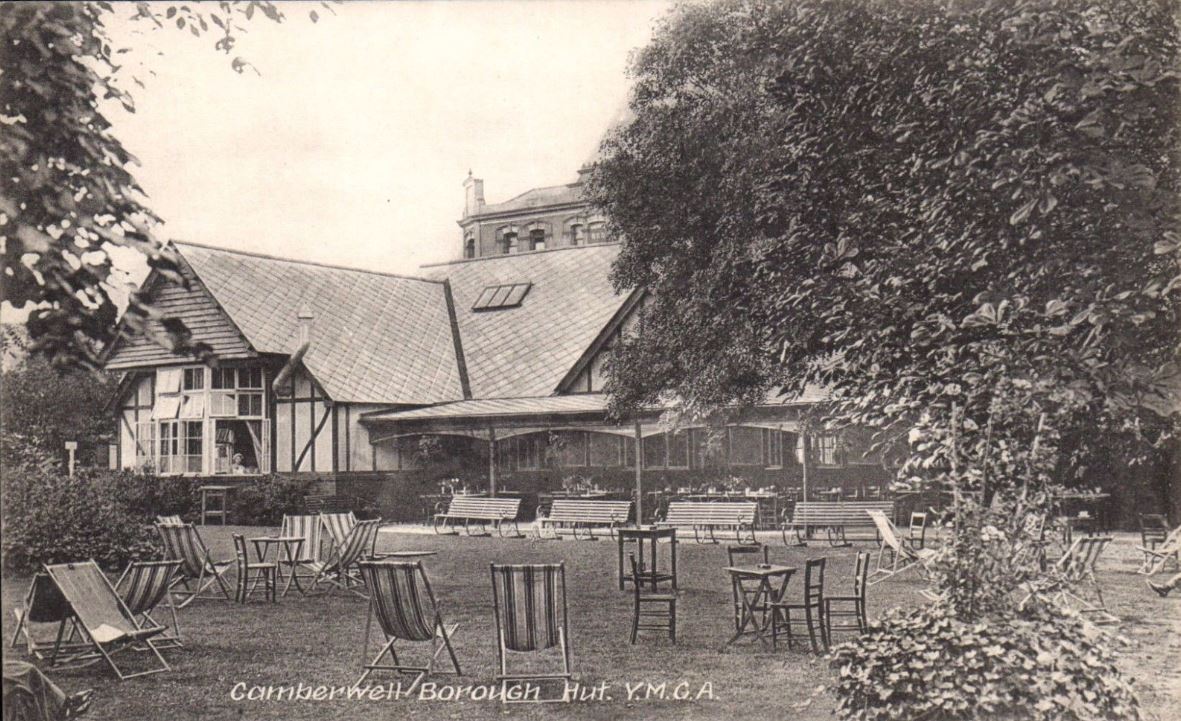
Here are some postcard photos of the YMCA exterior.
In the 1st to 3rd postcards you can see the upper part of the Father Red Cap pub still standing today.
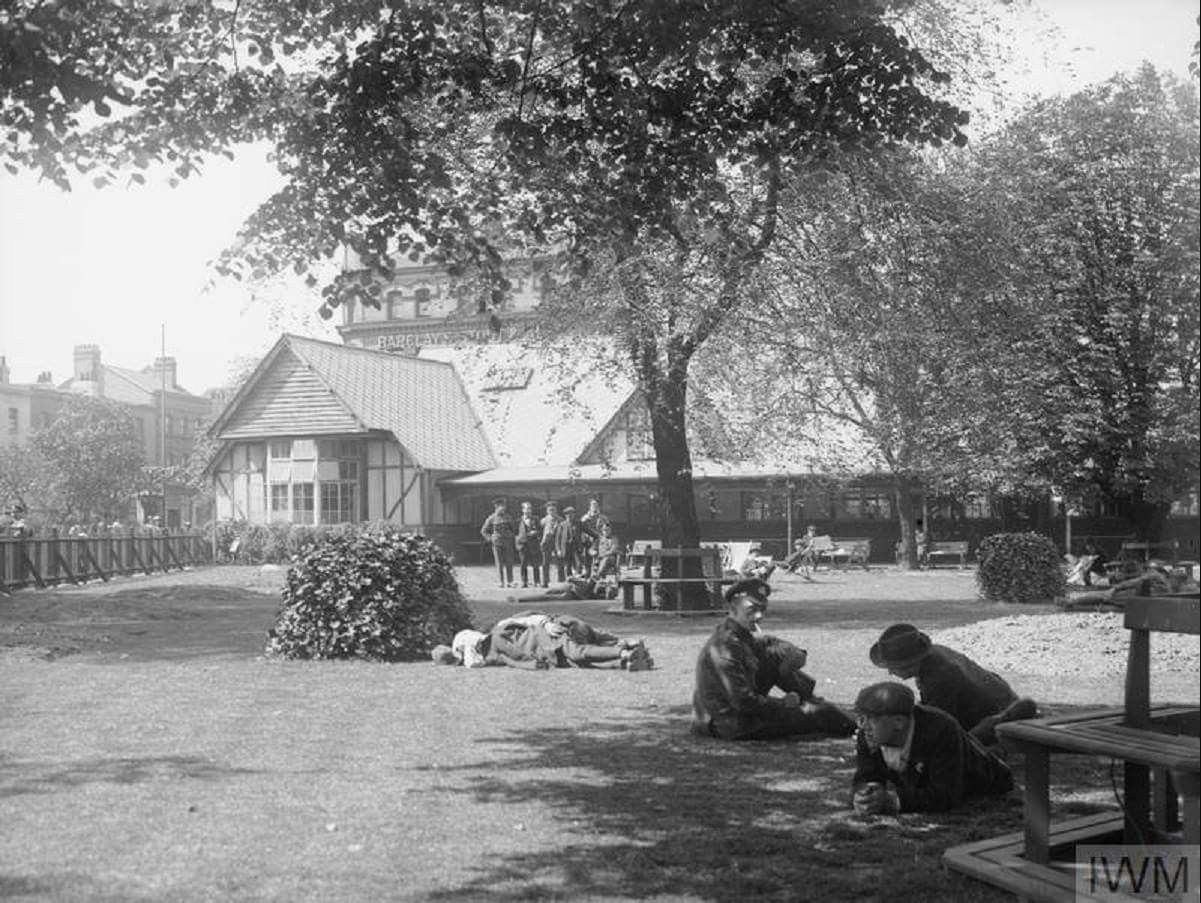
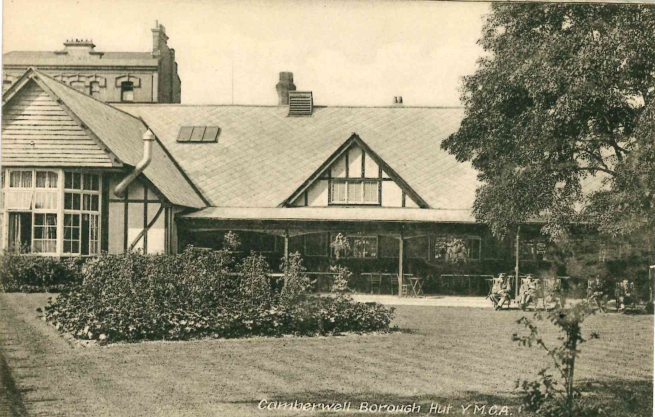
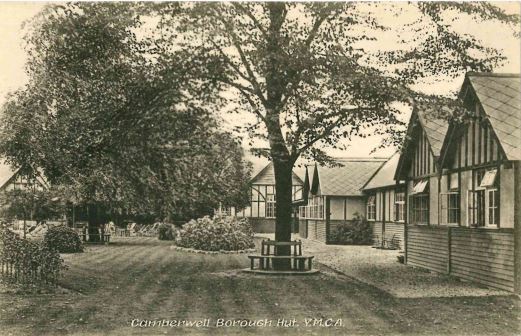
Another view, looking from Camberwell Road eastwards towards D’Eynsford Road.

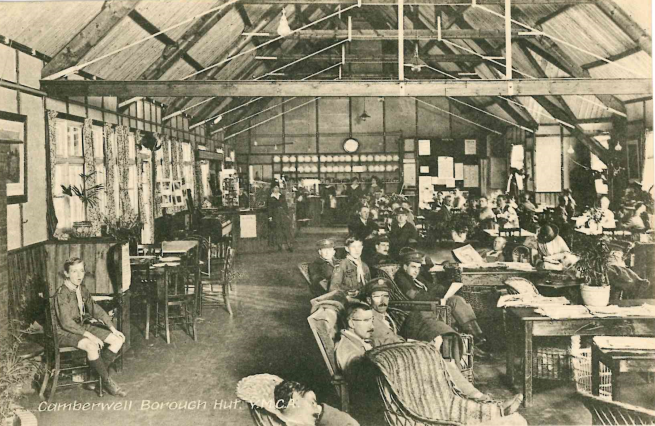
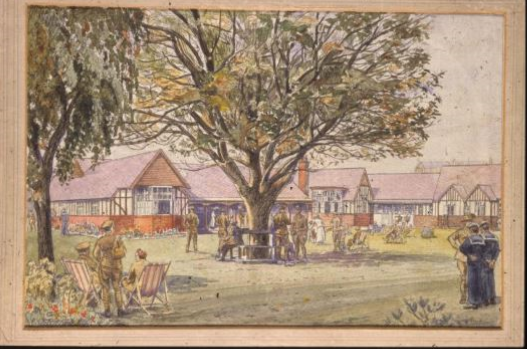
Alfred Weeks, a representative of the Metropolitan Sunday Schools offers us the following descriptions of the YMCA hut. He described it as a “long rambling building, like a golfing pavilion, confronted by a fresh grass lawn, studded with trees and geranium beds, and backed by a clear blue sky…” The entrance was right on the street. He described the inside as “some old baronial banqueting hall”
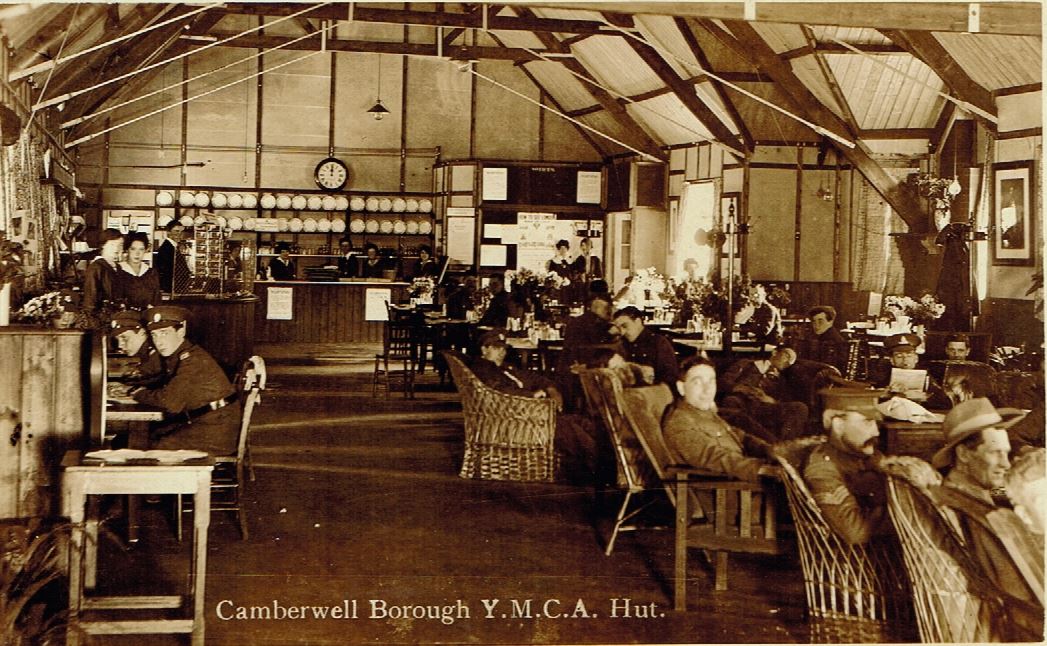
“…At one end a counter spread with multitudinous plates and light refreshments. The hall is rectangular in form, the further end being cut off to form a billiard room… The billiard rooms consisted of four tables with two large windows. One window had the YMCA emblem embossed on it and the other the arms of Camberwell.
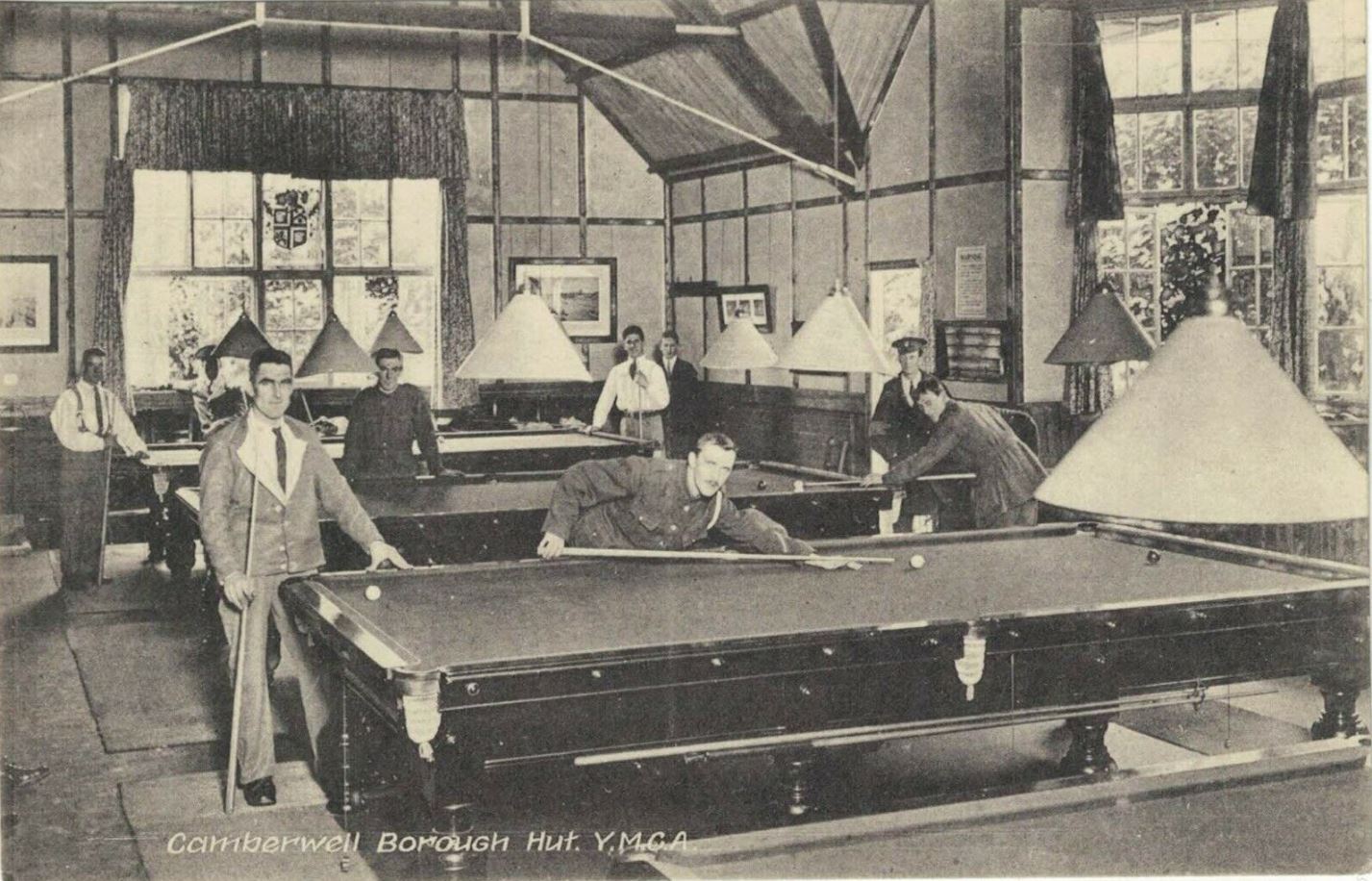
The next two postcards show the reading and writing “quiet” sections. The pictures were mostly scenes of country life though there was a copy of Raphael’s Madonna di San Sisto. 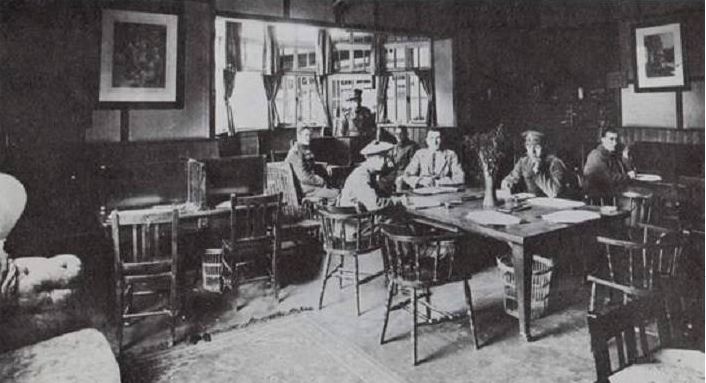
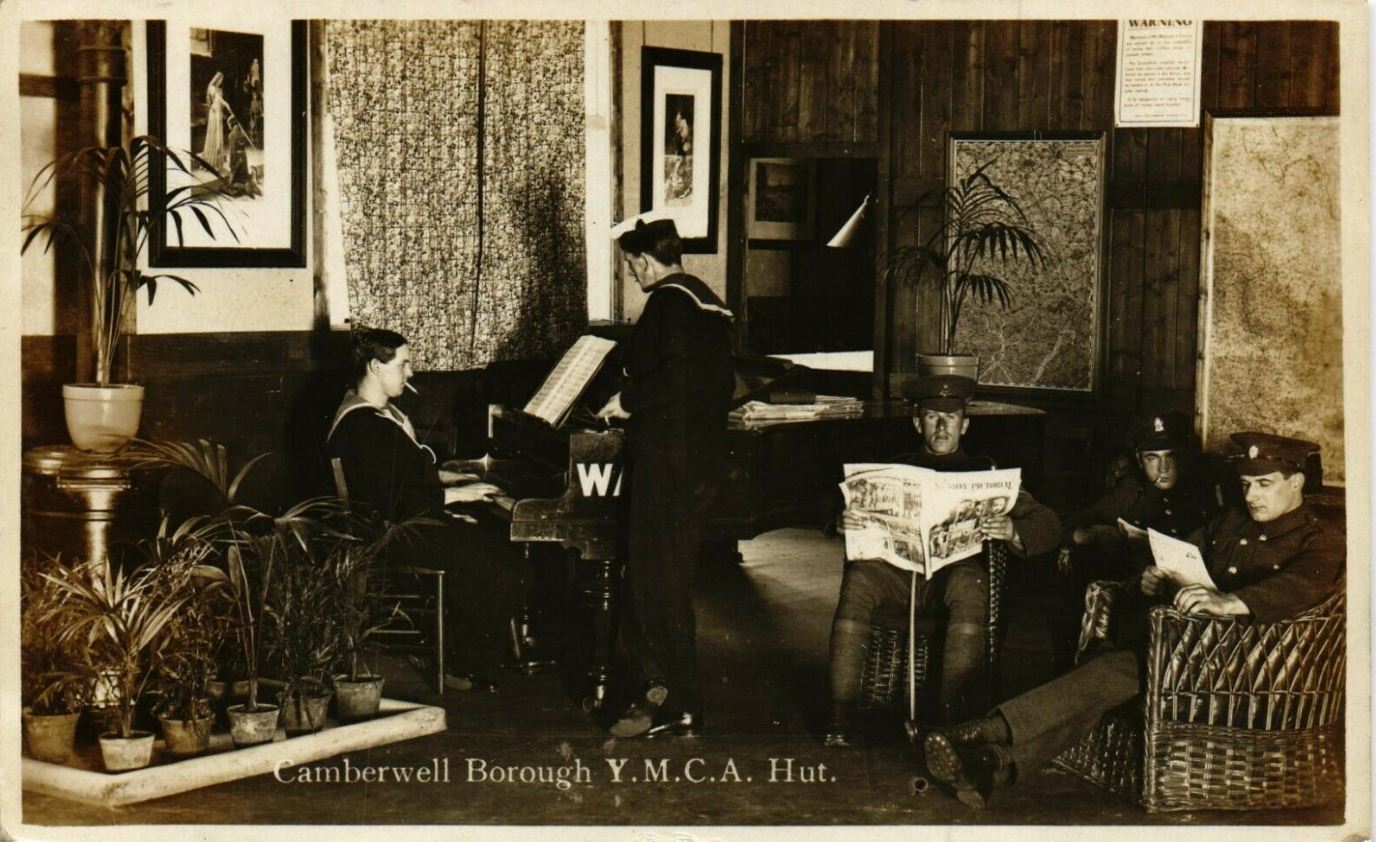
There was also a kit room for storage of soldiers gear and and a rifle rack, with tickets issued for later collection.
Finally at one end the dormitary with beds for 130 , and next to that staff bedrooms and a seperate space to accomodate 20 NCO’s. The building was heated by three stoves.
A YMCA fundraising postcard, one of a series of 312 postcards.
In 1923, Russell Reeve painted this water-colour, presumably from memory or postcard reminders, of the YMCA Hut, Camberwell Green, now part of the Southwark Council Art collection (ref GA0079).
After 1920 the hut was used by the Ministry of Labour until 1921 as a Labour exchange

when it was burnt down in January 1921 in a suspicous fire.
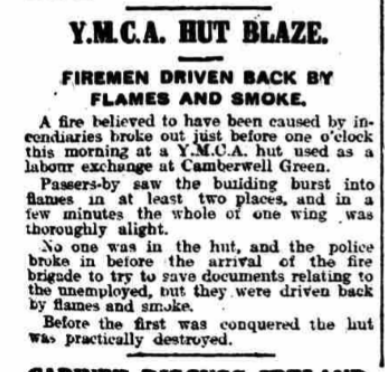
Newspaper report from The Globe January 15, 1921
Thanks to
Southwark Archives for their help with tracking down relevant documents.
The YMCA in the First World War by Sue McGeever and Andrew Gill.
British Newspaper Archive
I have lived in the Loughborough junction area for over 42 years, and for 39 of those years I have had my hair cut at Albertos on Camberwell Green.
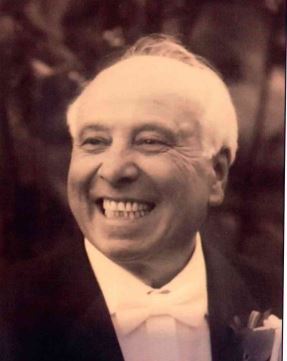
In that time we have had many conversations and I learned just a little about his life. He was born like his 5 brothers and 1 sister in Newcastle. His father and mother emigrated to Newcastle where all the children were born. His father was a shoemaker. They returned to Italy in 1936 when Alberto was 4 years old where his father joined the army. Italy is where Alberto learned barbering.
He returned to the UK in 1948 and started working in London’s West End and Southampton. He opened Albertos in March 1961 having worked in a barber shop around the corner on Camberwell New Road.
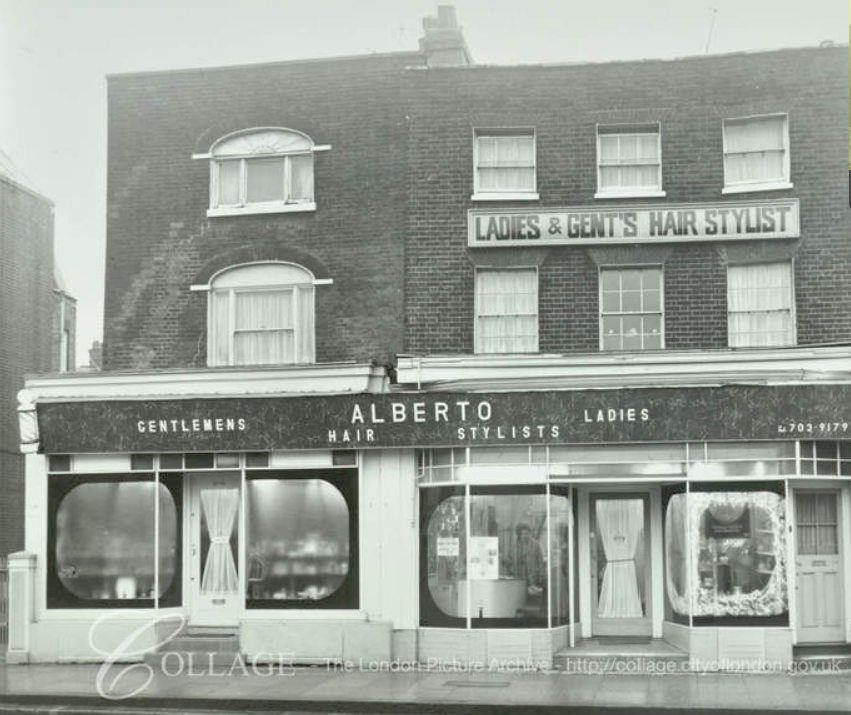
Photo: London Metropolitan Archives, 1972. reference 54533
He was a fixture in Camberwell ever since.
Alberto Petrozzi (1932-2019), it’s been a pleasure. RIP.
This poem by Ray Pool was uploaded to writeoutload in September 2017, you can hear Ray read this poem at this link. You can also hear Ray read samples of other poems.
https://www.writeoutloud.net/public/blogentry.php?blogentryid=70261
in the father redcap on camberwell green
a fight broke out
the worst i’ve seen
blood and beer all up the walls
all the fault of billy bloxsome
now the pub has changed its name
it’s called the nollywood club (for nigerians)
fair do’s. I’ve never tried to knock one out
all those boozers have changed or gone
familiar faces on the streets an age away.
More cameras and bollards,
but that’s modern times.
Let’s make it clear
there’s more fear out there than ever was
in the father redcap on camberwell green.
(and yes, billy was good to his mum).
 | Loughborough Road hi… on An Art Exhibition in the aband… |
 | rjbarnard1957 on Henry Gastineau – W… |
 | 7 May 1916 – G… on The YMCA Hut on Camberwell… |
 | VIF Art Café on What’s with all the coff… |
 | John on Northampton House – Denm… |