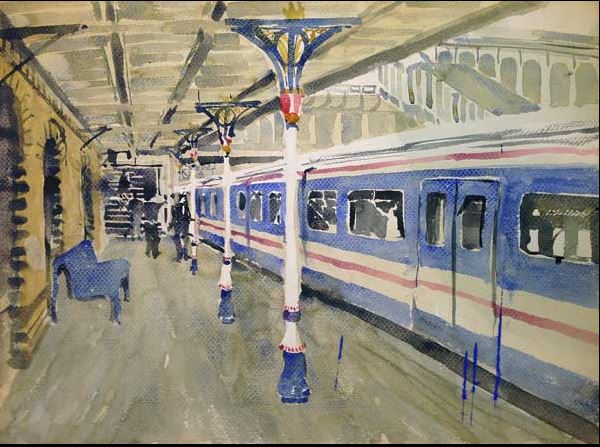
This painting is titled Last Train From Denmark Hill and was painted by Thomas Bucci. Thomas painted it I assume during a visit to London which is undated.
You can check out all his work via his website:

This painting is titled Last Train From Denmark Hill and was painted by Thomas Bucci. Thomas painted it I assume during a visit to London which is undated.
You can check out all his work via his website:
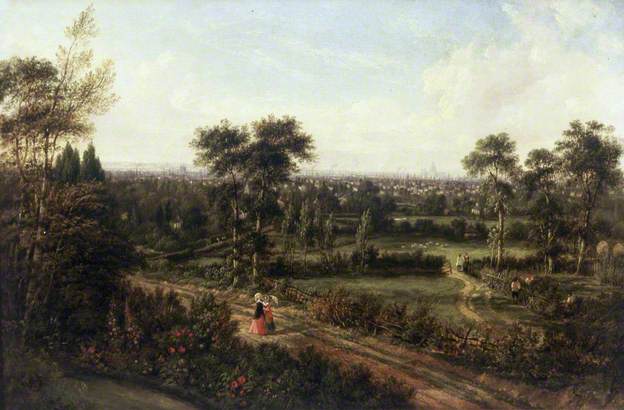
This undated painting titled A Panoramic View of London from Denmark Hill is by Alexander Nasmyth and is in the Hackney Council collection. Nasmyth died in Edinburgh on April 10, 1840
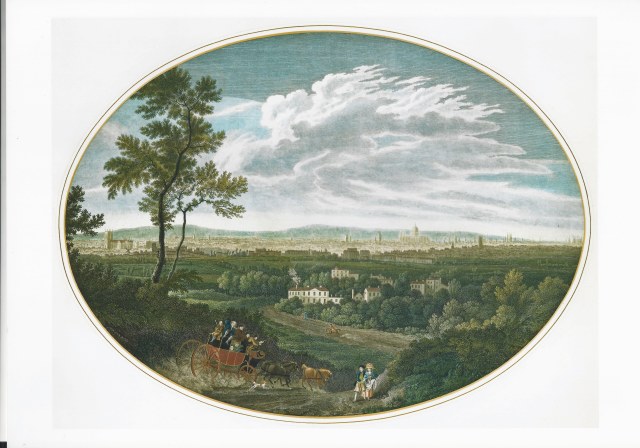
This engraving titled A South View of the Cities of London and Westminster is by Daniel Lerpiniere dated 1779. It is part of the Southwark Art Collection.

A print named London from Camberwell on the South, 1808, Tabart & Co.
Always interesting is all the street / shop fascia art you can see around Loughborough Junction.
By far the most prolific artist is Morganico, whose work can be seen in a number of places.

Joels & Barneys Cafe, Loughborough Junction by Morganico.
Next, Gandhi also by Morganico, on the Herne Hill Road railway arches wall.
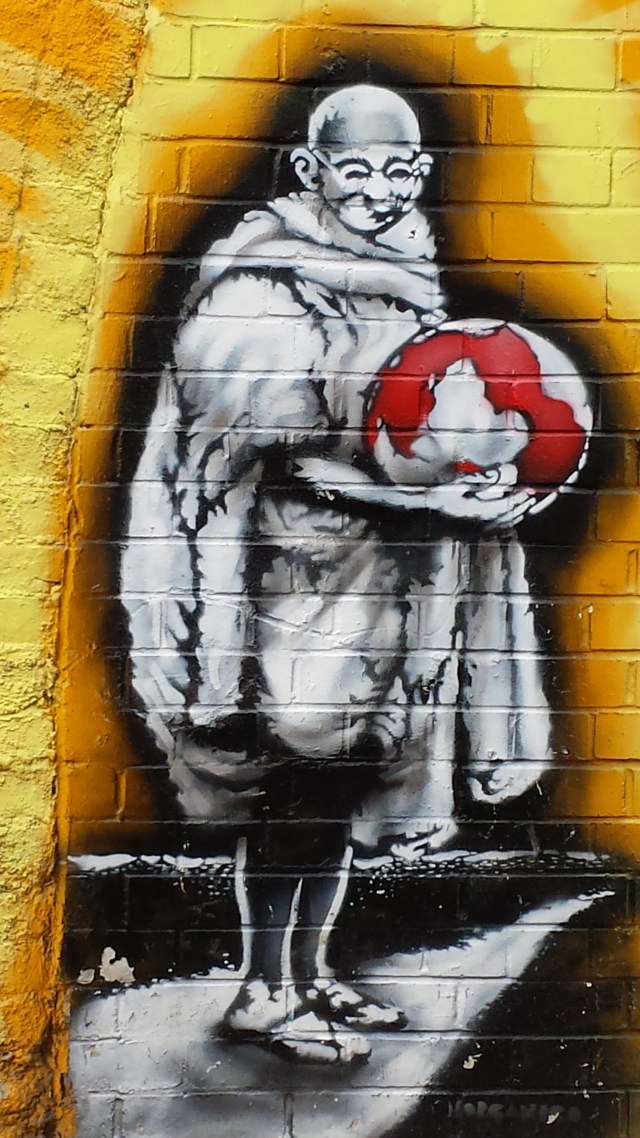
Next to Gandhi was Soapy Moos carwash
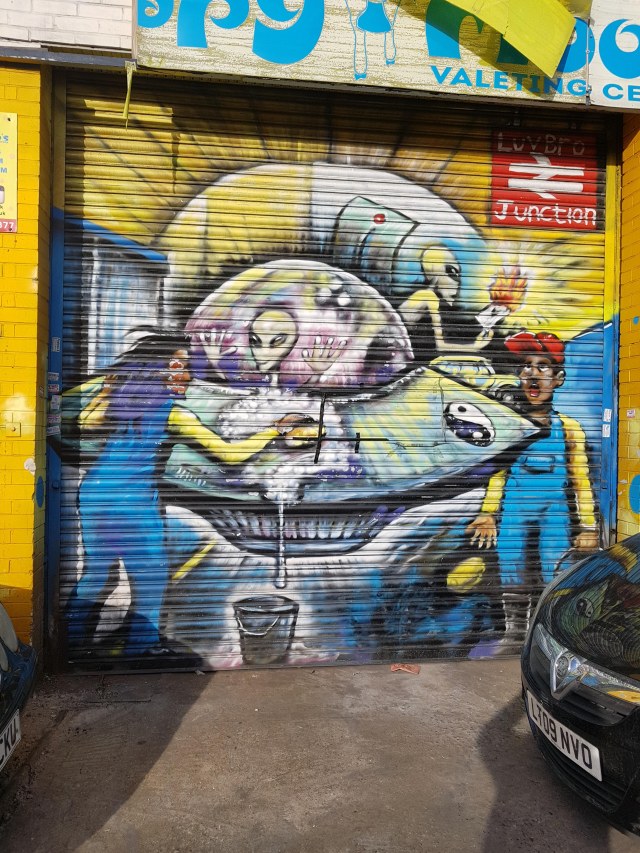
Unfortunately, now painted over by Network Rail as part of their refurbishment plans for the arches. We lost both Soapy Moos and Gandhi.
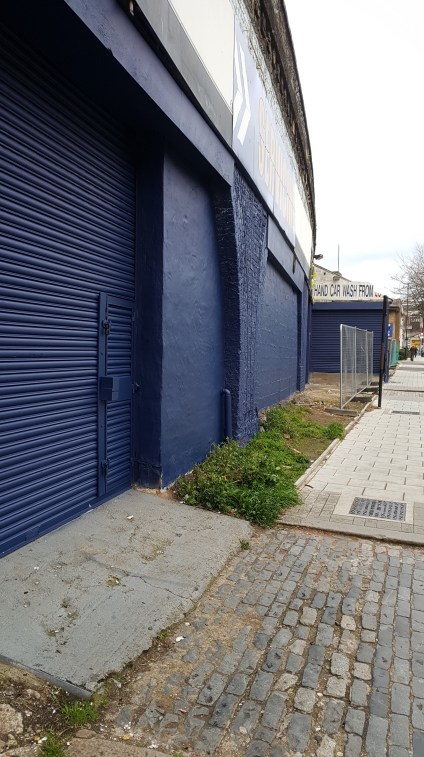
Photo taken, March 2019
On Herne Hill Road for a short time in 2017 was this witch road sign
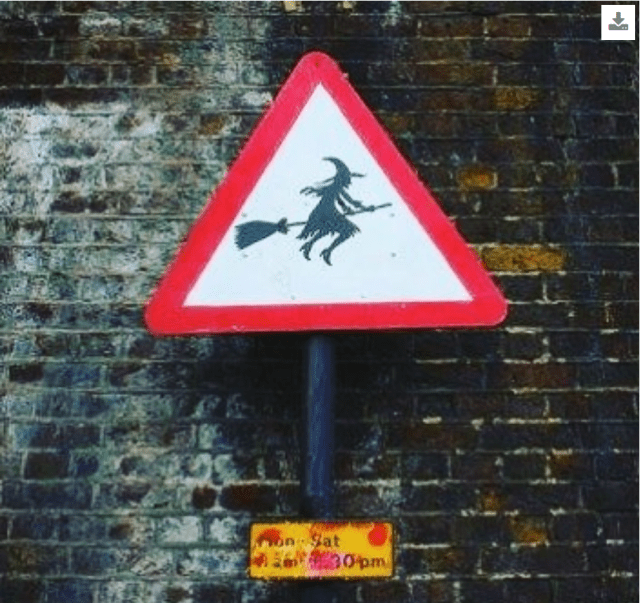
And can still be seen in a tiny poster form on Herne Hill Road titled Morganico The Leaky Cauldron. Along with a cat … possibly the witches cat.
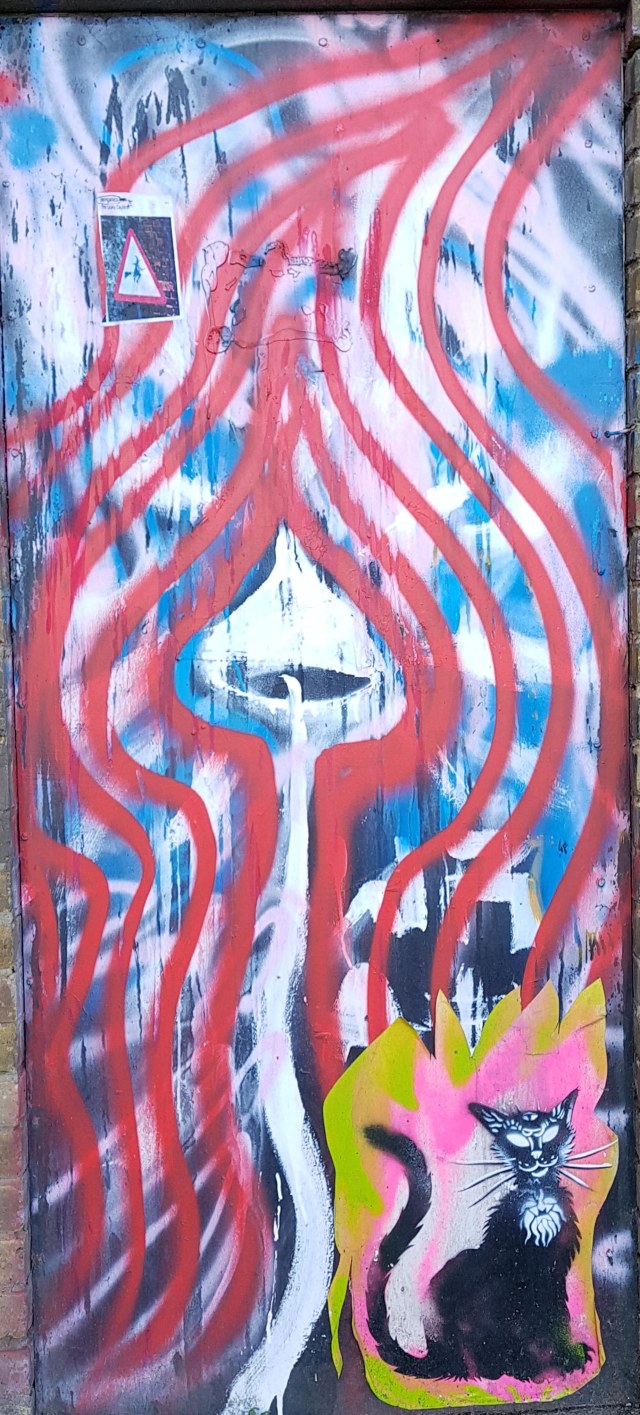
Morganico was also responsible for the restoration of the meth lab explosion fire damage to the Hokusai wave on Coldharbour Passage in 2014.

Nick Stevens photo: 2016
The following is located on Hinton Road.
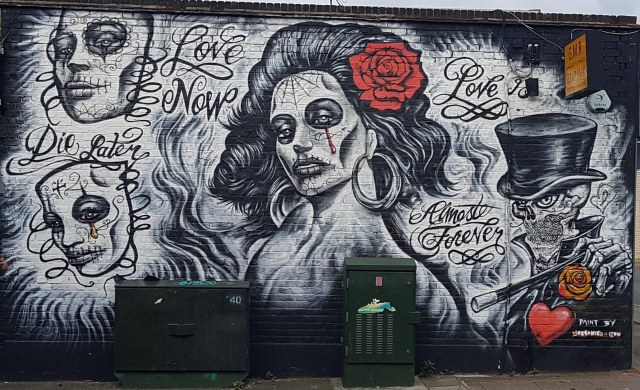
Next to the above painting is this work
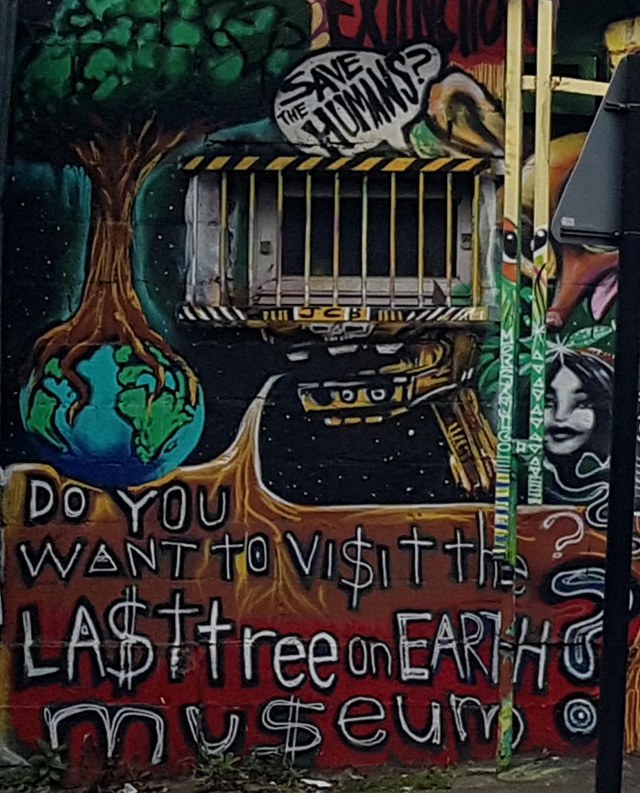
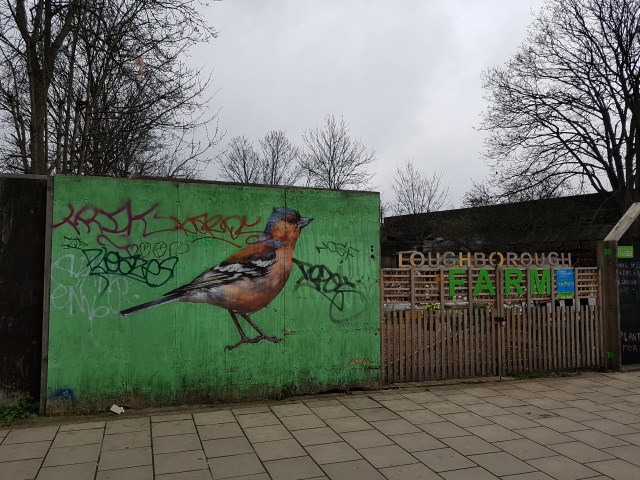
On the the entrance to the Loughborough Farm we have this, now with added tagging.
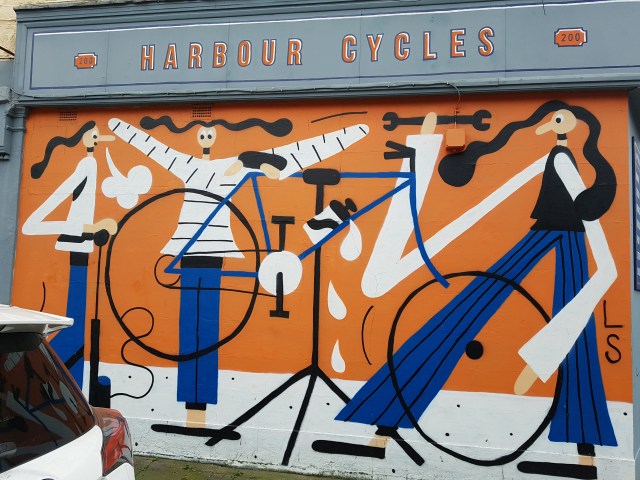
On the Flaxman Road wall of Harbour Cycles we can see
And on the outside shelving outside Kashmir Halal Meats, Fruit & Veg.
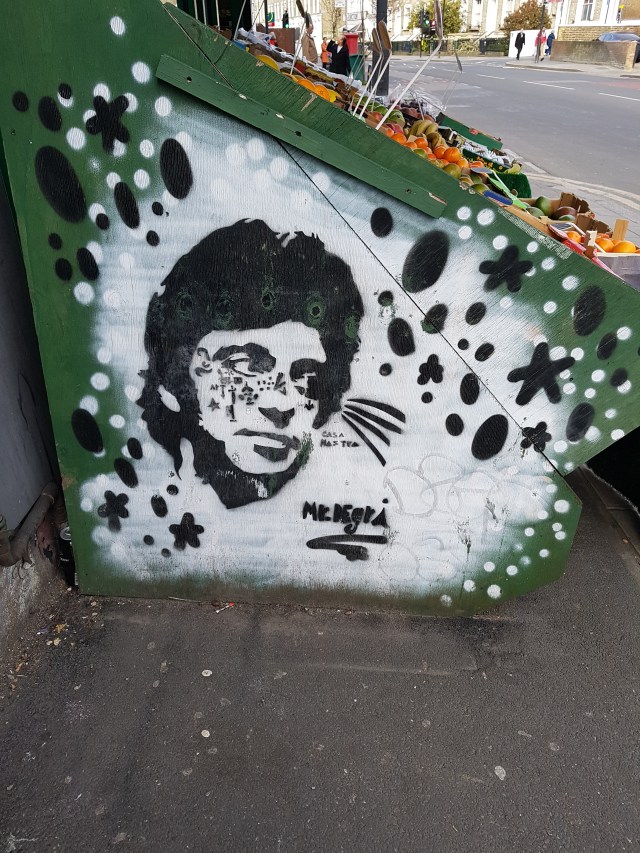
And this little gem on the road sign at the junction of Herne Hill Road and Wanless Road
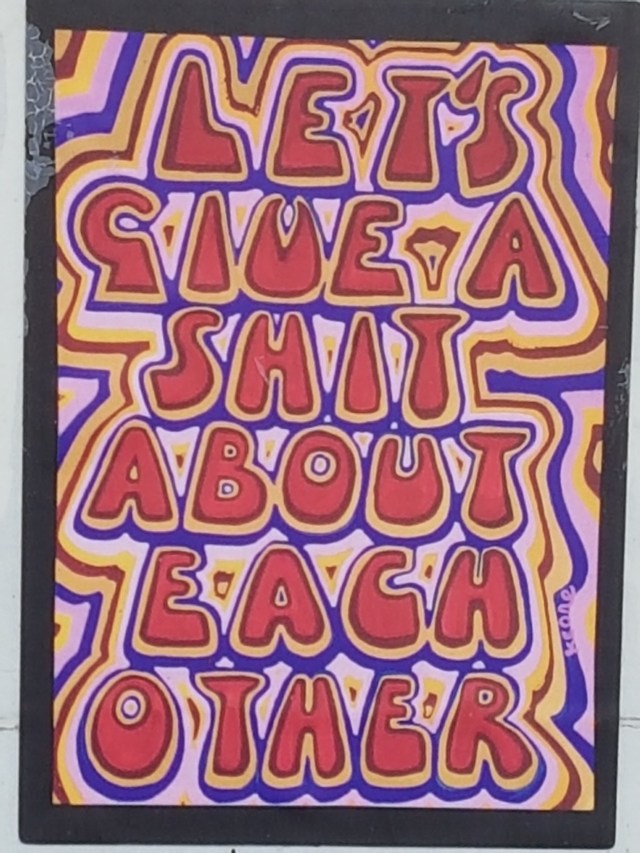
All photos by Loughborough Junction blog except the Witch on Herne Hill Road which was taken from the Morganico gallery and the Hokusai taken by Nick Stevens 2016.
September 2018 : Another Morganico on Loughborough Road next to Loughborough Farm.
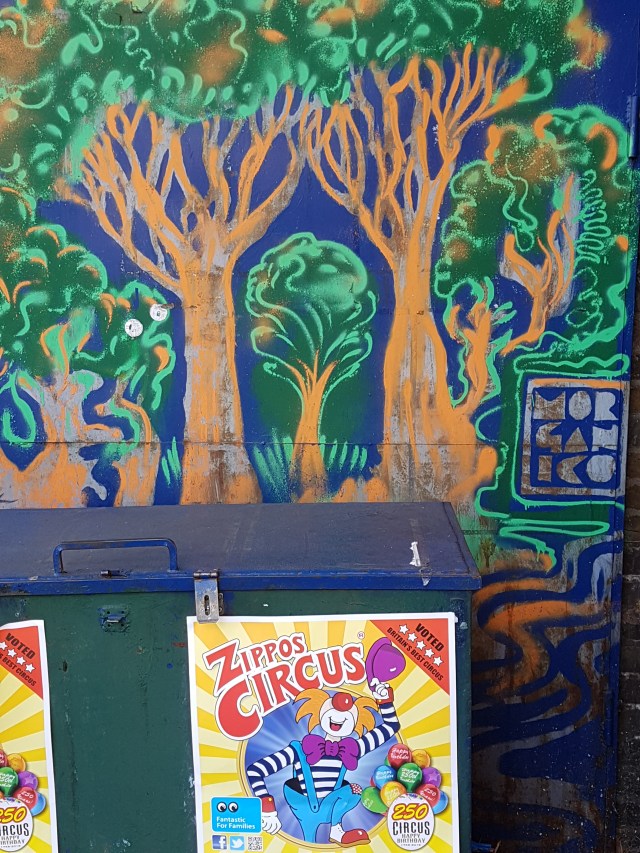
Morganico can be found at https://twitter.com/mORGANICo_cOM or https://www.instagram.com/morganico_com/
Two pieces by Lizzie Parry. www.lizzieparry.net
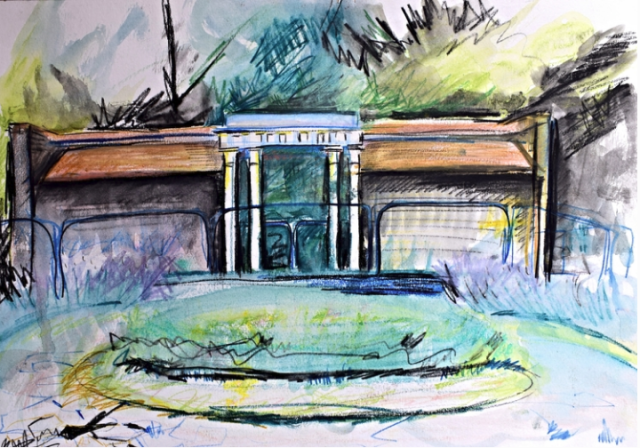
Ruskin Park: coloured pencil on paper

Ruskin Park: pastel on paper
A couple of examples of Lizzie’s work which has number of Camberwell/Peckham related pieces . Well worth a look.
Before street numbering began in the 1870’s blocks of buildings had individual names. Today you can still see this on a number of terraces that still exist.
This is Dover Terrace which runs from 171 Coldharbour Lane, the Dover Castle pub now open as The Junction to 189 Coldharbour Lane.

And across the road is Chichester Terrace,

which also included 6 terraced houses on either side of Eastlake Road and Luxor Street.

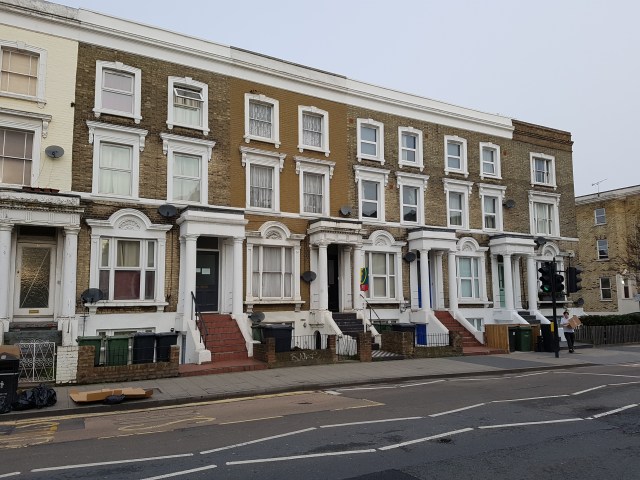
Further down towards Camberwell we have Brunswick Crescent which included both Parades on either side of Kenbury Street.


Next came Elizabeth Place comprising The Plough pub now known as Amaryllis and 4 shops, one missing now as you can see.

Further down Coldharbour Lane we have Frederick Terrace

On the return back down Coldharbour Lane, on the south side de Crespigny Villas.

Then from numbers 149 Coldharbour Lane to 169 Coldharbour Lane, originally named Harbour Terrace.

Across the road was a parade of shops called Chandos Terrace which runs from the east side of Pomfret Road to Flaxman Road.

At Loughborough Junction this parade was named Bedford Place.

And across the road this terrace was named Maria Place.

There were many others, but they no longer exist in their original form.
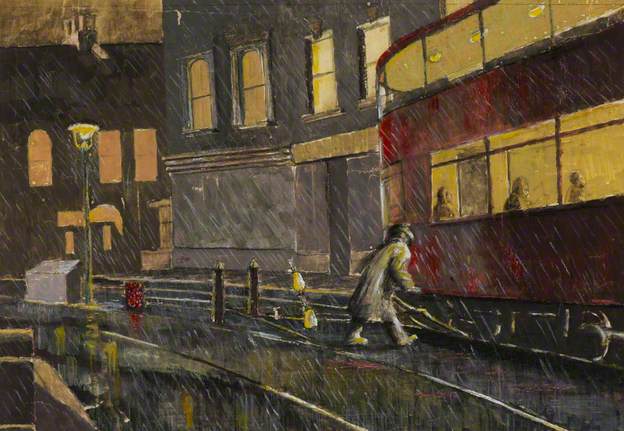
This painting from the Southwark Council Art Collection was painted in 1947
On 11th September, 2016, a blue plaque was unveiled on the Samuel Lewis Trust estate on Warner Road.
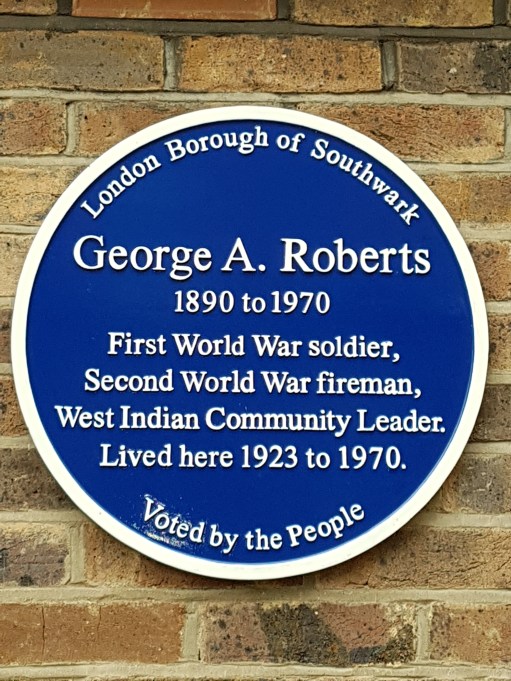
Photo: Loughborough-Junction blog
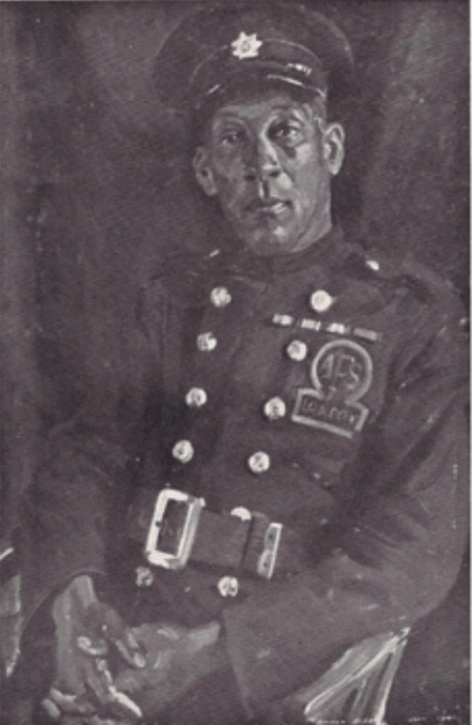
It was put up to celebrate the life of George Roberts. He was born in Trinidad on August 1st, 1890.
At the beginning of WW1 having trained as an electrician, he enlisted in the Trinidad Army and made his way to England and signed up as a Rifleman with the Middlesex Regiment. He saw action at the battles of Loos, the Somme and then the Dardenelles. He was wounded both at Loos and at the Battle of the Somme. He had a talent for throwing enemy bombs back into enemy lines. He was given leave during the war to return to Trinidad to recruit more men, and was able to sign up more than 250 recruits.
After the war, he settled in Peckham and worked at his trade of electrician. In 1931, he was one of the founder members of The League of Coloured Peoples, an organisation founded by Dr Harold Moody.
.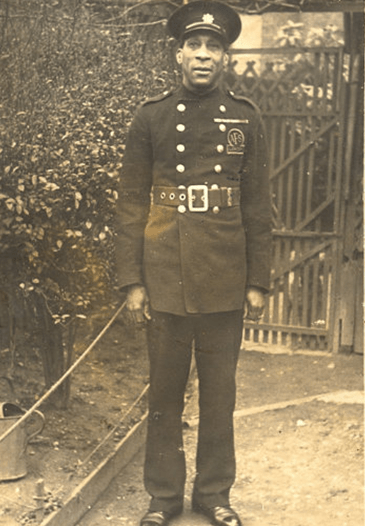
When World War 11 broke out he enlisted in the Home Front, working as a firefighter in Southwark after completing his training in 1939. Working out of New Cross Fire Station he was promoted Section Leader in 1943 and was awarded the British Empire Medal in the Kings 1944 Birthday honours.
He was a vigorous campaigner for ex servicemans rights and founded the local branch of the British Legion. He lived in the Samuel Trust Estate for 50 years until his death in Kings College Hospital in January 1970.
Around this time, he had his portrait painted by Norman Heppel. According to Southwark News the whereabouts of the painting is unknown.
Sources:
https://en.wikipedia.org/wiki/George_Arthur_Roberts
Southwark News , 15 September 2016: article by Alex Yeates
A lot of the information used in the Southwark News article was based on research by Stephen Bourne http://www.stephenbourne.co.uk/
Added May 2019 – Please check out the family website devoted to George Arthur Roberts run by his great grand daughter Samantha Harding.
https://www.georgearthurroberts.com/
At some point in August this new artwork was hung on the Green Man Skills Centre.
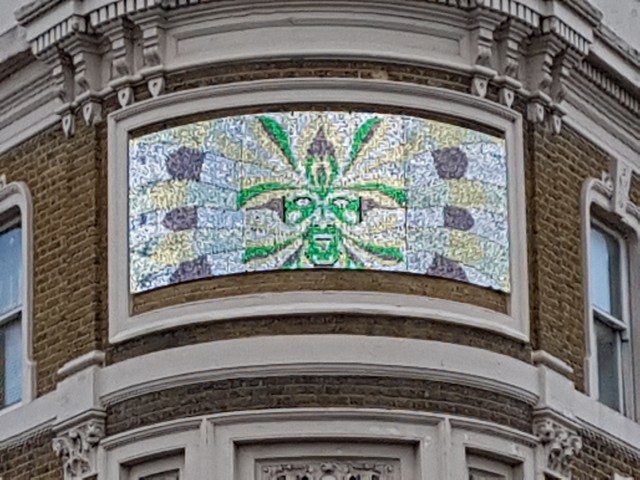
It is a Shimmer Wall Green Man which shimmers and sparkles in the sunshine. A collaboration organised by Sunshine International Arts & 40 + local residents in November 2016.
It was funded by Matthew Betts, the Landlord of the building with assistance from Shimmerwalls UK. Matthew is responsible for the regeneration of the old Green Man pub which was looking rather sad and run down after it’s closure in 2003. A trailblazer for the regeneration now happening in Loughborough Junction.
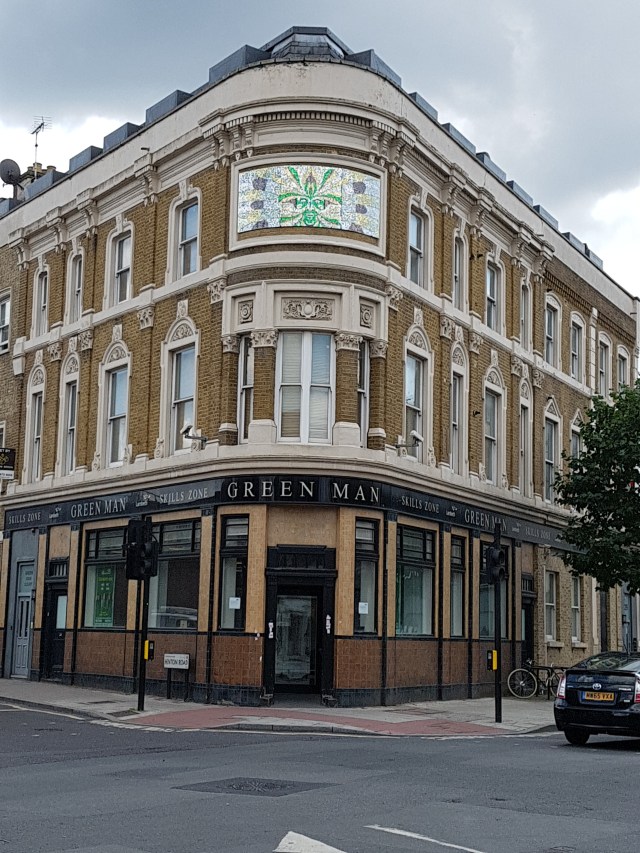
The Green Man is a symbol of rebirth and regeneration. Here is a link to Green Man on Wikipedia. https://en.wikipedia.org/wiki/Green_Man
This painting, Oil on Canvas is set in Loughborough Junction at night time.
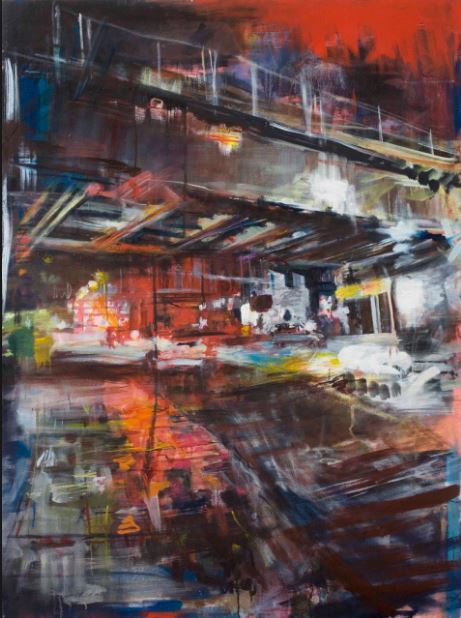
http://artawards.clydeco.com/gallery/untitled-samuel-wray-easton-city-guilds-of-london-art-school/
This sign in Loughborough Junction on the corner of Loughborough Road & Coldharbour Lane points you south …
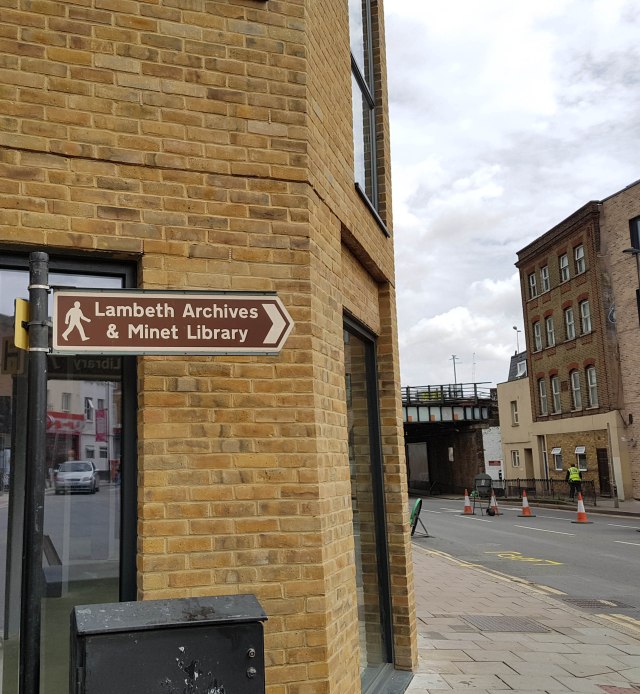
Minet Library and Lambeth Archives are of course in the opposite direction… heading north. Who knows how long it’s been there, just noticed it today.
I guess some joker has swung it round.
Postscript February 2018 : “Health warning No 1: If you visit the archives via Loughborough Junction railway station, ignore the nearby road sign which points in the wrong direction! ”
Taken from a report by Barry Hepburn on the visit of The Society of Genealogists to Lambeth Archives 4th April 2014.
Update: March 2018. The sign now points in the right direction
 | Loughborough Road hi… on An Art Exhibition in the aband… |
 | rjbarnard1957 on Henry Gastineau – W… |
 | 7 May 1916 – G… on The YMCA Hut on Camberwell… |
 | VIF Art Café on What’s with all the coff… |
 | John on Northampton House – Denm… |

